
Του Δημήτρη Βόγγολη
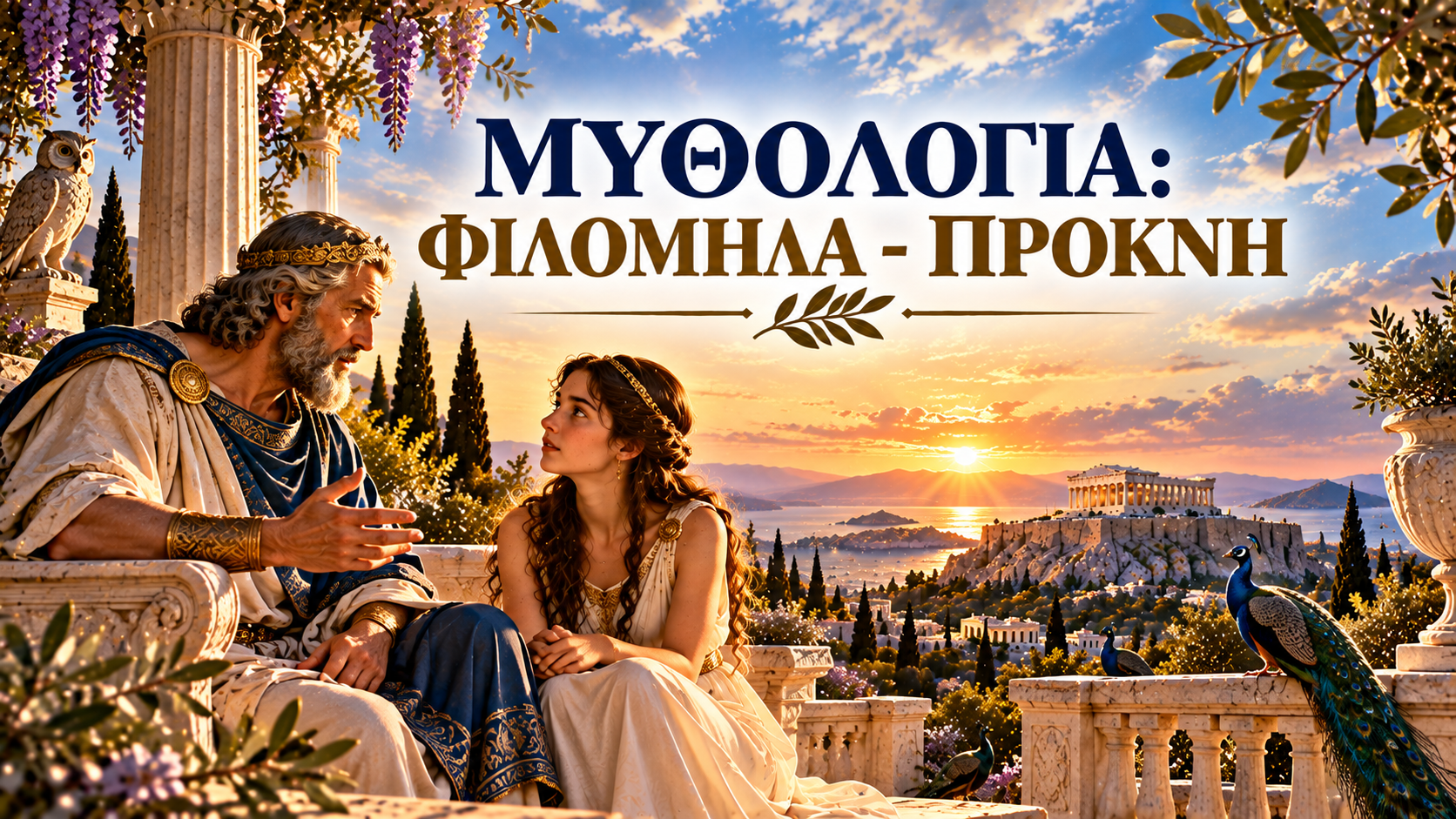
Στον αρχαίο ελληνικό μύθο, ο πατέρας της Πρόκνης και της Φιλομήλας είναι ο Πανδίων, βασιλιάς των Αθηνών.
In ancient Greek mythology, the father of Procne and Philomela is Pandion, king of Athens.
Ακολουθεί ένας φανταστικός διάλογος ανάμεσα στον Πανδίωνα και την κόρη του την Πρόκνη.
What follows is an imaginary dialogue between Pandion and his daughter Procne.
Λίγο πριν ή τη στιγμή που εκείνη φεύγει από την Αθήνα για να παντρευτεί τον Τηρέα στη Θράκη.
Shortly before, or at the moment when, she leaves Athens to marry Tereus in Thrace.
Ή σε μια δραματική στιγμή που εκφράζονται οι αγωνίες τους για την οικογένεια και τη μοίρα των αδελφών.
Or during a dramatic moment in which their anxieties about the family and the fate of the sisters are expressed.Διάλογος Πανδίωνα και Πρόκνης
Dialogue Between Pandion and Procne
Πανδίων: Στέκεσαι σιωπηλή, Πρόκνη μου, και το βλέμμα σου ταξιδεύει πίσω από τα τείχη της Αθήνας.
You stand silent, my Procne, and your gaze wanders beyond the walls of Athens.
Φοβάσαι τον δρόμο για τη Θράκη; Do you fear the journey to Thrace?
Πρόκνη: Δεν φοβάμαι τον δρόμο, πατέρα. I do not fear the journey, father.
Φοβάμαι τη σιωπή που με περιμένει εκεί πάνω.
I fear the silence that awaits me there.
Με δίνεις σύζυγο σε έναν πολεμιστή που ξέρει μόνο από σπαθιά και μάχες.
You are giving me in marriage to a warrior who knows only swords and battles.
Θα είμαι μια ξένη σε άγρια γη.
I shall be a stranger in a wild land.
Πανδίων: Ο Τηρέας στάθηκε σύμμαχος και σωτήρας μας στον πόλεμο με τους Θηβαίους.Tereus stood as our ally and savior in the war against the Thebans.Το χέρι σου είναι το τίμημα της ειρήνης για την πόλη μας.Your hand is the price of peace for our city. Αλλά και η δική σου ασφάλεια. But also the guarantee of your own safety.
Θα σε τιμάει ως βασίλισσα. He will honor you as a queen.
Πρόκνη: Η τιμή δεν γεμίζει την καρδιά, πατέρα.
Honor does not fill the heart, father.
Αφήνω εδώ τη μικρή μου αδελφή, τη Φιλομήλα.
I leave behind my little sister, Philomela.
Είναι τόσο εύθραυστη και γεμάτη ζωή.
She is so fragile and full of life.
Ψιθυρίζει πως θα της λείψω.
She whispers that she will miss me.
Σου ορκίζομαι, μην την αφήσεις να φύγει μακριά μου ποτέ.
I beg you, never let her go far away from me.
Υποσχέσου μου πως δεν θα της ζητήσεις να κάνει ποτέ τέτοιο ταξίδι.
Promise me that you will never ask her to make such a journey.
Πανδίων: Η Φιλομήλα θα μείνει εδώ, κοντά μου, στο φως της Αθήνας.
Philomela will remain here, close to me, in the light of Athens.
Κανείς δεν θα την αγγίξει. No one shall touch her.
Κανένας ξένος δεν θα διασχίσει το κατώφλι μας για να την πάρει.
No stranger will cross our threshold to take her away.
Σου το δίνω τον λόγο μου, κόρη μου.
You have my word, my daughter.
Πήγαινε τώρα με θάρρος. Go now with courage.
Η μοίρα των βασιλιάδων γράφεται με θυσίες.
The fate of kings is written through sacrifices.
Πρόκνη: Μακάρι οι θεοί να ακούνε τον λόγο σου, πατέρα.
May the gods hear your words, father.
Γιατί τώρα που αφήνω τούτη την αγκαλιά, η ψυχή μου βαραίνει.
For now that I leave this embrace behind, my soul grows heavy.
Σαν να διαισθάνεται πως το κακό αργά ή γρήγορα βρίσκει τον δρόμο του.
As though it senses that evil, sooner or later, always finds its way.
Στον μύθο μεσολαβούν χρόνια σιωπής, η φρικτή κακοποίηση της Φιλομήλας από τον Τηρέα, ο ακρωτηριασμός της γλώσσας της και το κεντημένο ύφασμα με το οποίο αποκαλύπτει την αλήθεια στην Πρόκνη.
In the myth, years of silence pass, along with Philomela’s terrible abuse at the hands of Tereus, the mutilation of her tongue, and the embroidered tapestry through which she reveals the truth to Procne.
Ο διάλογος που ακολουθεί μεταφέρεται στο τελικό, τραγικό στάδιο του μύθου.
The following dialogue takes place in the final and tragic stage of the myth.
Η Πρόκνη έχει ήδη σκοτώσει τον γιο της, τον Ίτυ, για να εκδικηθεί τον Τηρέα.
Procne has already killed her son, Itys, in order to take revenge on Tereus.
Επιστρέφει νοερά, ή μέσα από τις τύψεις της, στον πατέρα της, Πανδίωνα.
She returns in her thoughts, or through her feelings of guilt, to her father, Pandion.
Ο οποίος σύμφωνα με την παράδοση πέθανε από τη λύπη του.
Who, according to tradition, died of grief.
Καθώς οι θεοί μεταμορφώνουν τις δύο αδελφές σε πουλιά για να γλιτώσουν από την οργή του Τηρέα.
As the gods transform the two sisters into birds so that they may escape the wrath of Tereus.
Το Τέλος του Μύθου: Η Μεταμόρφωση
The End of the Myth: The Transformation
Τι είναι αυτό το αίμα στα χέρια σου;
What is this blood on your hands?
Πού είναι ο εγγονός μου, ο Ίτυς; Where is my grandson, Itys?
Τι κάνατε στη Θράκη; What have you done in Thrace?
Δεν υπάρχει πια Ίτυς, πατέρα. Itys exists no longer, father.
Έγινε το δείπνο του πατέρα του. He became his father’s meal.
Ο Τηρέας έφαγε τις ίδιες του τις σάρκες, όπως εκείνος κατέφαγε τις δικές μας ψυχές!
Tereus ate his own flesh, just as he devoured our souls!
Θεοί του Ολύμπου…Gods of Olympus…
Τι φρίκη! What horror!
Γιατί φτάσατε σε τέτοια κτηνωδία;
Why did you descend into such brutality?
Πού είναι η Φιλομήλα; Where is Philomela?
Την προστάτεψες; Did you protect her?
Κοίταξέ την, πατέρα! Look at her, father!
Κοίταξε την αγαπημένη σου Φιλομήλα.
Look at your beloved Philomela.
Δεν έχει πια φωνή να σου μιλήσει.
She no longer has a voice with which to speak to you.
Ο σύζυγός μου, ο άνθρωπος που μου έδωσες για την «ειρήνη», τη βίασε και της έκοψε τη γλώσσα για να κρύψει το έγκλημά του!
My husband, the man you gave me for “peace,” violated her and cut out her tongue to hide his crime!
Η σιωπή που φοβόμουν έγινε το κλουβί της.
The silence I feared became her prison.
Ο λόγος μου…My word…
Η υπόσχεσή μου να την κρατήσω στην Αθήνα…
My promise to keep her in Athens…
Όλα γκρεμίστηκαν.Everything has collapsed.
Το σκοτάδι της Θράκης μας κατάπιε.
The darkness of Thrace swallowed us.
Τώρα ο Τηρέας καταφθάνει με γυμνό σπαθί.
Now Tereus approaches with a drawn sword.
Σας κυνηγάει!He is chasing you!
Τρέξτε, κόρες μου, τρέξτε να σωθείτε!
Run, my daughters, run and save yourselves!
Δεν μπορούμε να τρέξουμε άλλο, πατέρα.
We can run no longer, father.
Τα πόδια μας βαραίνουν από το κρίμα.
Our feet are weighed down by guilt.
Αλλά η ψυχή μας ζητάει να πετάξει μακριά από τους ανθρώπους.
But our souls long to fly away from humankind.
Ακούς το θρόισμα; Do you hear the rustling?
Τι συμβαίνει στα σώματά σας; What is happening to your bodies?
Τα χέρια σας βγάζουν φτερά… Your arms are growing wings…
Οι φωνές σας αλλάζουν! Your voices are changing!
Οι θεοί μας λυπήθηκαν, πατέρα.
The gods have taken pity on us, father.
Με μεταμορφώνουν σε αηδόνι.
They are transforming me into a nightingale.
Θα θρηνώ για πάντα τον Ίτυ στα δάση, με μια γλυκιά, πονεμένη φωνή.
I shall mourn Itys forever in the forests with a sweet and sorrowful voice.
Και η Φιλομήλα; And Philomela?
Η μικρή μου; My little one?
Εκείνη γίνεται χελιδόνι.
She is becoming a swallow.
Θα πετάει γρήγορα, ελεύθερη, χωρίς να μπορεί να αρθρώσει λέξεις.
She will fly swiftly and freely, unable to form words.
Αλλά το κελάηδισμά της θα θυμίζει για πάντα τη σιωπηλή της κραυγή.
But her song will forever recall her silent scream.
Ακόμα και ο Τηρέας έγινε τσαλαπετεινός.
Even Tereus has become a hoopoe.
Να μας κυνηγάει αιώνια χωρίς να μπορεί να μας φτάσει.
Condemned to pursue us forever without ever reaching us.
Πετάξτε, πουλιά μου…Fly away, my birds…
Φύγετε μακριά από την κακία των ανθρώπων.
Fly far away from the wickedness of humankind.
Η Αθήνα θα θρηνεί για πάντα τις χαμένες της πριγκίπισσες.
Athens will forever mourn its lost princesse
Η μεταμόρφωση της Πρόκνης, της Φιλομήλας και του Τηρέα σε πουλιά αποτελεί ένα από τα πιο δυνατά και πολυεπίπεδα στοιχεία του μύθου.
The transformation of Procne, Philomela, and Tereus into birds is one of the most powerful and multilayered elements of the myth.
Στην αρχαία ελληνική μυθολογία, η μεταμόρφωση σπάνια είναι μια τυχαία τιμωρία ή ανταμοιβή.
In ancient Greek mythology, transformation is rarely a random punishment or reward.
Λειτουργεί ως αιώνιος συμβολισμός της ψυχικής κατάστασης των ηρώων.
It functions as an eternal symbol of the heroes’ psychological state.
Και ως μια λύση, μια κάθαρση, σε ένα αδιέξοδο ανθρώπινο δράμα.
And as a resolution, a form of catharsis, to a tragic human dead end.
Ακολουθεί η αναλυτική ερμηνεία των μεταμορφώσεων.
The following is a detailed interpretation of these transformations.
1. Φιλομήλα: Το Χελιδόνι (Σιωπηλός Θρήνος)1. Philomela: The Swallow (Silent Lament)
Η μεταμόρφωση. The transformation.
Στην κλασική ελληνική παράδοση, η Φιλομήλα μεταμορφώνεται σε χελιδόνι.
In the classical Greek tradition, Philomela is transformed into a swallow.
Αν και στη ρωμαϊκή λογοτεχνία, όπως στον Οβίδιο, οι ρόλοι των αδελφών συχνά αντιστρέφονται.
Although in Roman literature, such as in Ovid, the roles of the sisters are often reversed.
Ο συμβολισμός.The symbolism.
Το χελιδόνι είναι ένα πουλί που δεν έχει ολοκληρωμένο, μελωδικό κελάηδισμα.
The swallow is a bird that does not possess a full melodious song.
Αλλά βγάζει γρήγορους, κοφτούς και τραυλούς ήχους.
Instead, it produces quick, sharp, and stuttering sounds.
Αυτό αντανακλά άμεσα την κομμένη γλώσσα της Φιλομήλας.
This directly reflects Philomela’s severed tongue.
Το χελιδόνι προσπαθεί να μιλήσει, αλλά δεν μπορεί να αρθρώσει λέξεις.
The swallow seems to try to speak, yet cannot form wordsΗ κοινωνική διάσταση.
The social dimension.
Συμβολίζει το θύμα που στερήθηκε τη φωνή του από την πατριαρχική ή φυσική βία.
It symbolizes the victim who was deprived of their voice through patriarchal or physical violence.
Αλλά συνεχίζει να επιστρέφει κάθε άνοιξη κοντά στις στέγες των ανθρώπων για να υπενθυμίζει το έγκλημα.
Yet it continues to return each spring near human dwellings to remind the world of the crime.
2. Πρόκνη: Το Αηδόνι (Αιώνια Θλίψη και Τύψεις)
2. Procne: The Nightingale (Eternal Sorrow and Guilt)
Η μεταμόρφωση. The transformation.
Η Πρόκνη μεταμορφώνεται σε αηδόνι.
Procne is transformed into a nightingale.
Το αηδόνι είναι το πουλί με το πιο μελωδικό αλλά και πιο θλιμμένο τραγούδι της φύσης.
The nightingale is the bird with the most melodious yet sorrowful song in nature.
Ο συμβολισμός. The symbolism.
Το αηδόνι κελαηδά κυρίως τη νύχτα.
The nightingale sings mainly at night.
Κρυμμένο στα φυλλώματα. Hidden among the leaves.
Το τραγούδι του ερμηνεύεται ως ένας αιώνιος θρήνος της μάνας για τον φόνο του παιδιού της.
Its song is interpreted as an eternal lament of a mother mourning the death of her child.
Του Ίτυ. Of Itys.
Η Πρόκνη κουβαλά το ασήκωτο βάρος της παιδοκτονίας.
Procne carries the unbearable burden of infanticide.
Η εκδίκησή της ήταν τόσο ακραία που την αποξένωσε για πάντα από την ανθρώπινη φύση.
Her revenge was so extreme that it forever alienated her from human nature
.Το κελάηδισμά της είναι η καλλιτεχνική μετουσίωση του απόλυτου πόνου και των τύψεων.
Her song is the artistic transfiguration of absolute pain and remorse.
3. Τηρέας: Ο Τσαλαπετεινός (Η Αγριότητα του Θηρευτή)
3. Tereus: The Hoopoe (The Brutality of the Predator)
Η μεταμόρφωση. The transformation.
Ο βασιλιάς της Θράκης μεταμορφώνεται σε έποπα, δηλαδή σε τσαλαπετεινό.
The king of Thrace is transformed into a hoopoe.
Ο συμβολισμός. The symbolism.Ο τσαλαπετεινός έχει ένα χαρακτηριστικό λοφίο στο κεφάλι του.
The hoopoe has a distinctive crest on its head.Το λοφίο αυτό μοιάζει με πολεμική περικεφαλαία.
This crest resembles a warrior’s helmet.
Και το μακρύ, αιχμηρό ράμφος του θυμίζει σπαθί.
And its long, pointed beak resembles a sword.
Είναι ένα πουλί με επιθετική εμφάνιση.
It is a bird with an aggressive appearance.
Η τιμωρία. The punishment.
Η μεταμόρφωσή του δείχνει ότι ο Τηρέας στερήθηκε την ανθρώπινη ιδιότητά του.
His transformation shows that Tereus was stripped of his humanity.
Επειδή λειτούργησε με καθαρά ζωώδη και βίαια ένστικτα.
Because he acted according to purely animalistic and violent instincts.
Καταδικάζεται να καταδιώκει αιώνια τα δύο πουλιά.
He is condemned to pursue the two birds forever.Χωρίς να μπορεί ποτέ να τα φτάσει ή να τα βλάψει ξανά.
Without ever being able to catch or harm them again.
Γενικότερα Συμπεράσματα της Ανάλυσης
General Conclusions of the Analysis
Η Φύση ως Καταφύγιο και Δικαιοσύνη.
Nature as Refuge and Justice.
Όταν το ανθρώπινο δίκαιο αποτυγχάνει, οι Θεοί παρεμβαίνουν μέσω της φύσης.When human justice fails, the gods intervene through nature.
Ο Τηρέας ήταν βασιλιάς και δεν υπήρχε κανείς στη Θράκη να τον τιμωρήσει.
Tereus was a king, and there was no one in Thrace able to punish him.
Η μεταμόρφωση αφαιρεί τους ήρωες από τον κόσμο των ανθρώπων.
Transformation removes the heroes from the world of humans.
Βάζοντας τέλος στον κύκλο του αίματος.
Thus bringing an end to the cycle of bloodshed.
Από το Έγκλημα στην Τέχνη.
From Crime to Art.
Ο μύθος χρησιμοποιεί τη μεταμόρφωση για να εξηγήσει την προέλευση των ήχων της φύσης.
The myth uses transformation to explain the origin of the sounds of nature.
Το θλιμμένο τραγούδι του αηδονιού και το νευρικό πέταγμα του χελιδονιού
δεν είναι πια απλά φυσικά φαινόμενα.The sorrowful song of the nightingale and the restless flight of the swallow are no longer merely natural phenomena.
Αλλά η κραυγή μιας αρχαίας ανθρώπινης τραγωδίας που συνεχίζεται στο διηνεκές.Rather,
they are the cry of an ancient human tragedy that continues through eternity.
1. Ο Μύθος του Γκιώνη (Ψάχνοντας τον αδελφό του)
. The Myth of the Scops Owl (Searching for His Brother)
Ο γκιώνης είναι ένα μικρό είδος κουκουβάγιας.
The scops owl is a small species of owl.
Το λάλημά του είναι ένας πολύ χαρακτηριστικός, επαναλαμβανόμενος και μονοσύλλαβος ήχος, που ακούγεται σαν ένα μελαγχολικό σφύριγμα: «γκιόν… γκιόν…».
Its call is a very distinctive, repetitive, monosyllabic sound that resembles a melancholy whistle: “gion… gion…”.
Στην ελληνική λαογραφία υπάρχουν πολλές παραλλαγές για το πώς δημιουργήθηκε αυτό το πουλί, με πιο δημοφιλή την ιστορία των δύο αδελφών.
In Greek folklore, there are many versions explaining how this bird came into being, the most popular being the story of two brothers.
• Η ιστορία: Λένε ότι ο Γκιώνης ήταν κάποτε άνθρωπος.
• The story: It is said that Gionis was once a human being.
Είχε έναν αγαπημένο αδελφό, τον οποίο σε άλλες περιοχές ονομάζουν Αντώνη, σε άλλες Γιάννη ή Δήμο.
He had a beloved brother, who in some regions is called Antonis, in others Giannis, or Dimos.
• Το δράμα: Τα δύο αδέλφια έχασαν κάτι πολύ πολύτιμο (συνήθως ένα άλογο ή τις αρνάδες τους).
• The tragedy: The two brothers lost something very precious (usually a horse or their lambs).
Μέσα στην οργή, τη σύγχυση ή από ατύχημα, ο ένας αδελφός σκότωσε τον άλλον (ή ο ένας χάθηκε στο δάσος).
In anger, confusion, or by accident, one brother killed the other (or one became lost in the forest).
• Η μεταμόρφωση: Όταν ο επιζών συνειδητοποίησε το κακό που έγινε, τρελάθηκε από τις τύψεις και τη λύπη.
• The transformation: When the surviving brother realized the evil that had occurred, he was driven mad by guilt and sorrow.
Παρακάλεσε τον Θεό να τον απαλλάξει από το ανθρώπινο μαρτύριο και να τον κάνει πουλί.
He begged God to free him from human suffering and transform him into a bird.
Ο Θεός τον μεταμόρφωσε στον γκιώνη.
God transformed him into a scops owl.
• Το κελάηδισμα: Από τότε, πετάει από δέντρο σε δέντρο μέσα στη νύχτα και φωνάζει απεγνωσμένα το όνομα του χαμένου του αδελφού.
• The call: Since then, he flies from tree to tree during the night, desperately calling out the name of his lost brother.
«Αντώνη… Αντώνη!» ή «Γκιών… Γκιών!», προσπαθώντας αιώνια να τον βρει.
“Antonis… Antonis!” or “Gion… Gion!”, eternally trying to find him.
2. How Is This Connected to the Nightingale and the Myth of Philomela?
Αν και ο μύθος του γκιώνη είναι καθαρά λαϊκός (παραμύθι της υπαίθρου), παρουσιάζει τεράστιες θεματικές ομοιότητες με τον αρχαίο μύθο της Πρόκνης και της Φιλομήλας που είδαμε πριν.
Although the myth of the scops owl is purely folkloric (a tale of the countryside), it shows remarkable thematic similarities to the ancient myth of Procne and Philomela that we examined earlier.
1. Η Αδελφική Αγάπη: Και στις δύο ιστορίες, ο κεντρικός άξονας είναι η βαθιά αγάπη ανάμεσα σε δύο αδέλφια (Πρόκνη-Φιλομήλα / Γκιώνης-Αντώνης).
1. Brotherly and Sisterly Love: In both stories, the central theme is the deep love between two siblings (Procne and Philomela / Gionis and Antonis).
2. Η Μεταμόρφωση από Λύπη: Όπως οι θεοί λυπήθηκαν τις δύο αδελφές και τις έκαναν αηδόνι και χελιδόνι για να γλιτώσουν, έτσι και ο Θεός της λαϊκής παράδοσης λυπάται τον αδελφό και τον κάνει πουλί.
2. Transformation Through Sorrow: Just as the gods took pity on the two sisters and transformed them into a nightingale and a swallow to save them, so too does the God of folk tradition take pity on the brother and turn him into a bird.
3. Ο Αιώνιος Θρήνος: Το αηδόνι (η Πρόκνη) κελαηδά με πόνο τη νύχτα επειδή κλαίει για τον χαμένο της γιο, τον Ίτυ (το λάλημά του στην αρχαιότητα ακουγόταν σαν «ιτυύ… ιτυύ…»).
3. The Eternal Lament: The nightingale (Procne) sings sorrowfully during the night because she mourns her lost son, Itys (whose name was thought in antiquity to echo in the bird’s cry as “ityu… ityu…”).
Ομοίως, ο γκιώνης κλαίει τη νύχτα ψάχνοντας τον δικό του αδελφό («γκιόν… γκιόν…»).
Similarly, the scops owl cries through the night while searching for his own brother (“gion… gion…”).


