Θα διδαχθούν ποτέ οι μεγάλες δυνάμεις από τα ιστορικά τους λάθη;
Καθ. Πέτρος Π. Γρουμπός, Ομότιμος Καθηγητής Πανεπιστημίου Πατρών
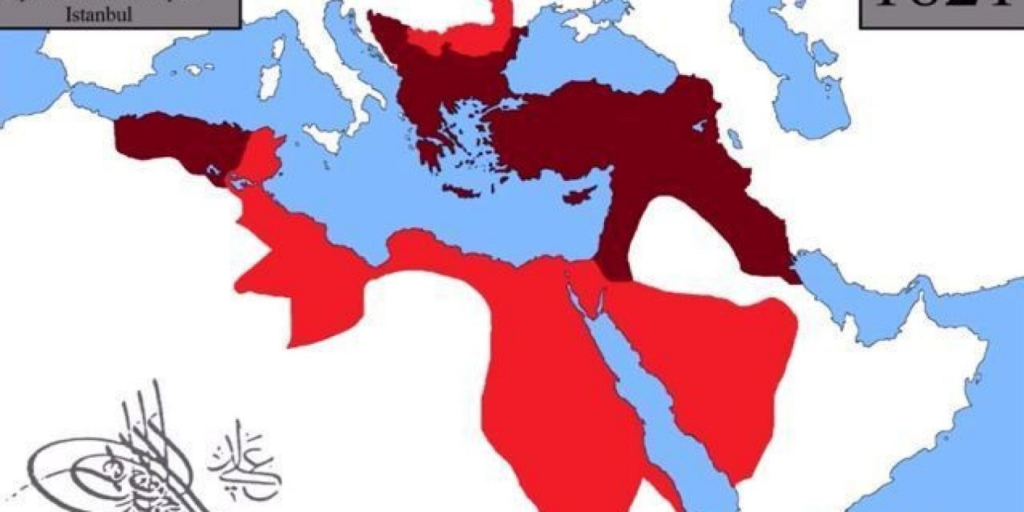
Χάρτης της Οθωμανικής Αυτοκρατορίας
Η ιστορία της ανθρωπότητας είναι σε μεγάλο βαθμό η ιστορία της ανόδου και της πτώσης των
αυτοκρατοριών. Από την αρχαιότητα έως τη σύγχρονη εποχή, ισχυρά κράτη επιδίωξαν να
επεκτείνουν την κυριαρχία τους, επιβάλλοντας τη δύναμή τους σε άλλους λαούς. Οι
περισσότερες γεννήθηκαν μέσα από πολέμους και κατακτήσεις, αλλά σχεδόν όλες οδηγήθηκαν
τελικά στην παρακμή και τη διάλυσή τους.
Σήμερα, παρά τις διαφορετικές μορφές ισχύος του σύγχρονου κόσμου, δεν απουσιάζουν οι
φιλοδοξίες για αναβίωση παλαιών αυτοκρατορικών οραμάτων. Είτε πρόκειται για ιστορική
νοσταλγία είτε για γεωπολιτική στρατηγική, η επιδίωξη επιστροφής σε «ένδοξες εποχές»
αποτελεί ένα επικίνδυνο και απατηλό όνειρο.
Οι αυτοκρατορίες του παρελθόντος στηρίχθηκαν στην κατάκτηση, στην υποταγή λαών και στην
επιβολή της ισχύος. Οι επεκτάσεις τους συνοδεύτηκαν από πολέμους, καταστροφές πολιτισμών
και τεράστιες ανθρώπινες απώλειες. Παρότι ορισμένες άφησαν σημαντική πολιτιστική ή
διοικητική κληρονομιά, αυτή δεν μπορεί να αποσυνδεθεί από το βαρύ τίμημα που πλήρωσαν
εκατομμύρια άνθρωποι.
Η Ρωμαϊκή, η Βυζαντινή, η Οθωμανική, η Βρετανική και η Ισπανική Αυτοκρατορία αποτελούν
χαρακτηριστικά παραδείγματα δυνάμεων που, παρά το μέγεθος και την ισχύ τους, τελικά
κατέρρευσαν. Οι αιτίες ήταν πολλές: οικονομική εξάντληση, εσωτερικές συγκρούσεις, κοινωνικές
ανισότητες, διαφθορά, τεχνολογικές αλλαγές και η εμφάνιση νέων δυνάμεων. Η ιστορία
αποδεικνύει ότι η υπερβολική συγκέντρωση ισχύος δημιουργεί τελικά αντιδράσεις και οδηγεί
στην αποδυνάμωση.
Στον 21ο αιώνα, η δημιουργία κλασικών αυτοκρατοριών είναι πολύ δυσκολότερη. Το διεθνές
δίκαιο, οι διεθνείς οργανισμοί, η οικονομική αλληλεξάρτηση και η τεχνολογική εξέλιξη έχουν
αλλάξει το παγκόσμιο περιβάλλον. Η ισχύς πλέον δεν μετριέται μόνο με στρατούς και εδάφη,
αλλά και με την οικονομία, την επιστήμη, την καινοτομία και την πολιτιστική επιρροή.
Ωστόσο, ορισμένες μεγάλες δυνάμεις εξακολουθούν να επιδιώκουν διεύρυνση της επιρροής
τους μέσω στρατιωτικών επεμβάσεων, οικονομικών πιέσεων ή ελέγχου στρατηγικών πόρων. Οι
μορφές μπορεί να έχουν αλλάξει, αλλά η λογική της κυριαρχίας παραμένει.
Το πραγματικό δίδαγμα της ιστορίας δεν είναι η αναζήτηση νέων αυτοκρατοριών, αλλά η
αποφυγή των λαθών που οδήγησαν σε πολέμους και καταστροφές. Η συνεργασία, ο σεβασμός
της κυριαρχίας των λαών, ο διάλογος και η ανάπτυξη αποτελούν τις μόνες σταθερές βάσεις για
ένα ασφαλέστερο μέλλον.
Πόσο ακόμη θα αποφεύγουν οι μεγάλες δυνάμεις να αναμετρηθούν με τις ιστορικές τους
ευθύνες και να αποδεχθούν ότι οι πολιτικές τους προκάλεσαν εκμετάλλευση, φτώχεια,
προσφυγιά και πολέμους; Και, κυρίως, πότε η διεθνής κοινότητα θα απαιτήσει από όσους, επί
αιώνες, επωφελήθηκαν από την εκμετάλλευση άλλων λαών να αναλάβουν τις ευθύνες τους,
ακόμη και με τη μορφή αποκατάστασης όπου αυτή δικαιολογείται; Ίσως μόνο τότε σταλεί το
ξεκάθαρο μήνυμα ότι η ατιμωρησία έχει όρια και ότι η ισχύς δεν μπορεί να υπερισχύει διαρκώς
της δικαιοσύνης.
Μόνο μέσα από την αναγνώριση των ιστορικών λαθών και τον σεβασμό του διεθνούς δικαίου
μπορεί να αποτραπεί η επιστροφή σε λογικές κυριαρχίας και αυτοκρατορικών φιλοδοξιών που
οδηγούν την ανθρωπότητα σε νέες συγκρούσεις
Η ιστορία έχει δείξει ότι καμία αυτοκρατορία δεν είναι αιώνια. Το μέλλον της ανθρωπότητας δεν
βρίσκεται στην αναβίωση αυτοκρατορικών φιλοδοξιών, αλλά σε έναν κόσμο όπου η ισχύς θα
υπηρετεί τη συνεργασία και την ειρήνη, όχι την κυριαρχία και την καταπίεση.
Revival of Empires? Will the great powers ever learn from their historical mistakes?
Prof. Peter P. Groumpos, Emeritus Professor, University of Patras, Greece.
The history of humanity is, to a large extent, the history of the rise and primary fall of empires.
From antiquity to the modern era, powerful states have sought to extend their dominion beyond
their natural borders, imposing their power upon other peoples. Empires were born from wars,
conquests, and political ambitions, yet almost all met the same fate: decline and, ultimately,
dissolution.
Today, despite the various forms of power characterizing the modern world, there is no shortage
of voices dreaming of the revival of old empires. Whether born of historical nostalgia or political
strategy, the idea of returning to glorious eras captivates certain leaders and societies. Yet, this
dream proves to be not only unattainable but also dangerous. It is a delusory dream!
Empires of the past were built on conquest, the subjugation of other peoples, and the projection
of power. Their expansion was accompanied by wars, looting, massacres, the rape of women,
the destruction of civilizations, and massive loss of human life. Some historians believe that
certain empires left behind a significant cultural and administrative legacy; however, this cannot
be divorced from the heavy price paid and the devastation suffered by millions of people.
History proves that no empire has ever been eternal. The Roman Empire, the Byzantine/Eastern
Roman Empire, the Ottoman, the British, the Spanish, and so many others—however powerful
they may have been—eventually collapsed. The reasons varied: economic exhaustion, internal
conflicts, social inequalities, administrative corruption, technological changes, and the rise of
new powers. Their collapse serves as a reminder that the excessive concentration of power
inevitably triggers reactions and leads to weakening.
In the 21st century, conditions are radically different. International law, international
organizations, economic interdependence, and technology make the creation (or revival) of
classical empires extremely difficult. Power is no longer measured solely by armies and territory,
but also by the economy, innovation, science, technology, and cultural influence—provided the
empire possesses a traditional and long-standing culture of its own.
Nevertheless, certain major powers continue to seek to expand their influence. These ambitions
manifest themselves variously through military interventions, economic dependence, energy
policy, or technological control. Although these forms differ from traditional empires, the logic of
domination persists. However, international reaction, global awareness, and the growing
importance of national sovereignty make it increasingly difficult to impose a permanent imperial
order.
The revival of empires also represents an ideological dead end. Modern societies are founded—
at least in principle—on the self-determination of peoples, freedom, human rights, and
democratic legitimacy. A return to models based on conquest and imposition would inevitably
lead to conflict, regional instability, and international isolation.
History never repeats itself in the same way. Those who attempt to revive imperial visions
usually overlook the fact that the conditions which enabled the creation of great empires no
longer exist. Technology, globalization, and the heightened political consciousness of peoples
have radically altered the international landscape.
The true lesson of history is not the pursuit of a new empire, but the avoidance of the mistakes
that led to the catastrophes of the past. Peaceful cooperation, respect for state sovereignty,
dialogue, and development constitute far more stable foundations for international security than
any imperial vision.
The revival of empires—whether presented as a return to lost glory or as a necessary
geopolitical strategy—remains an illusory dream. History has shown that every empire, no
matter how powerful it once appeared, eventually came to an end. Humanity’s future lies not in
the revival of imperial ambitions, but in building a world where power serves cooperation rather
than domination, and peace rather than conquest.
How much longer will the major powers remain beyond reproach—powers that, through their
interventions, colonial policies, and economic exploitation, played a decisive role in shaping
today’s global crises? When will they undertake an honest assessment of their historical
responsibilities and the tragic errors that drove millions of people into poverty, displacement, and
war?
And, above all, when will the international community demand that those who grew rich over
centuries by exploiting other people accept responsibility—even in the form of reparations,
where justified? Perhaps only then will a clear message be sent that impunity has limits and that
there is no longer any room for leaders who, disregarding international law and human life, seek
to resurrect empires of the past, driving humanity into new conflicts.