Του Δημήτρη Βόγγολη
ΜΑΘΗΜΑΤΑ
ΓΙΑ ΠΡΟΧΩΡΗΜΕΝΟΥΣ
της Ελληνικής γλώσσας μητέρας όλων των Γλωσσών
Με την χρήση των phonetics θα τονίζουμε τα κεφαλαία γράμματα σε κάθε λέξη .
Using phonetics we will emphasize the capital letters in each word
‘όπου ΕΕ θα τα προφέρουμε όπως στο πρόβατο sheep ή βλέπω με τα δύο ee or See.
‘where EE we will pronounce them as in sheep with the two ee or see.
Όπου Θ =ΤΗΕ ‘Όπως thunderstorm, thanks
‘Οπου Δ=ΤΗΕ ‘όπως mother,father
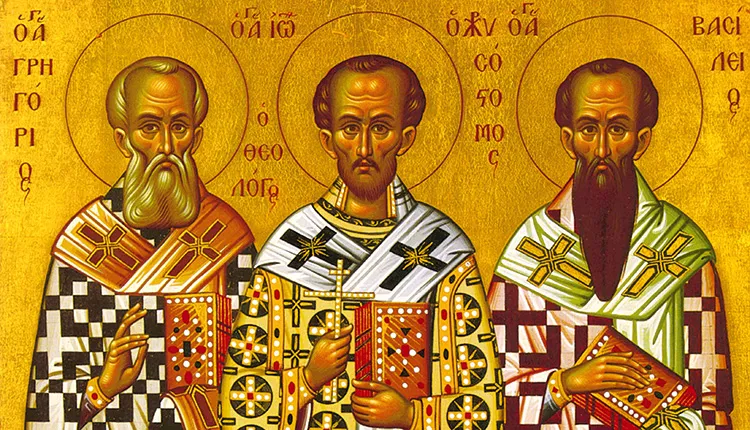
✨ Διάλογος των Τριών Ιεραρχών για την Ευχαριστία
Μέγας Βασίλειος:
Αδελφοί, η Ευχαριστία δεν είναι απλώς μυστήριο· είναι η αναπνοή της Εκκλησίας.
a-the-lfÍ, i ef-ha-ri-STÍ-a then Í-ne a-PLÓS mi-STÍ-ri-o; Í-ne i a-na-pno-Í tis ek-kli-SÍ-as
Basil the Great:
Brethren, the Eucharist is not merely a sacrament; it is the very breath of the Church.
Γρηγόριος ο Θεολόγος:
Και είναι ακόμη περισσότερο: είναι η μνήμη του Θεού μέσα στον άνθρωπο.
ke Í-ne a-KÓ-mi pe-ri-SÓ-te-ro: Í-ne i MNÍ-mi tu The-Ú MÉ-sa ston Án-thro-po
Gregory the Theologian:
And it is even more: it is God’s memory within the human being.
Ιωάννης ο Χρυσόστομος:
Η Ευχαριστία είναι η αγάπη που γίνεται τροφή. Ο Θεός που γίνεται πλησίασμα.
i ef-ha-ri-STÍ-a Í-ne i a-GÁ-pi pu YÍ-ne-te tro-FÍ — o The-ÓS pu YÍ-ne-te pli-SÍ-a-zma
John Chrysostom:
The Eucharist is love becoming nourishment. God becoming closeness.
Όταν κοινωνούμε, δεν λαμβάνουμε απλώς άρτο και οίνο· λαμβάνουμε την ίδια τη ζωή.
Ó-tan ki-no-NÚ-me, then lam-VÁ-nu-me a-PLÓS Ár-to ke Í-no; lam-VÁ-nu-me tin Í-thia ti zo-Í
Basil:
When we partake, we do not receive merely bread and wine; we receive life itself.
Γρηγόριος:
Και η ζωή αυτή είναι φως. Φως που δεν σβήνει, φως που δεν μικραίνει.
ke i zo-Í af-TÍ Í-ne fos — fos pu then SVÍ-ni, fos pu then mi-kre-NÍ
Gregory:
And that life is light. Light that does not fade, light that does not diminish.
Χρυσόστομος:
Γι’ αυτό λέγω: “Μετά φόβου Θεού, πίστεως και αγάπης προσέλθετε.”
yaft-Ó LÉ-go: “me-TÁ FÓ-vu The-Ú, PÍ-ste-os ke a-GÁ-pis pro-SÉL-the-te”
Chrysostom:
That is why I say: “With fear of God, faith, and love draw near.”
Μέγας Βασίλειος:
Η Ευχαριστία είναι ευχαριστία. Ευχαριστία για το είναι, για το φως, για την ύπαρξη.
i ef-ha-ri-STÍ-a Í-ne ef-ha-ri-sti-Í-a — ya to Í-ne, ya to fos, ya tin Í-par-xi
Basil:
The Eucharist is thanksgiving. Thanksgiving for being, for light, for existence.
Γρηγόριος:
Και είναι ακόμη και ευχαριστία για τον πόνο· γιατί μέσα από αυτόν μαθαίνουμε την ταπείνωση.
ke Í-ne a-KÓ-mi ke ef-ha-ri-sti-Í-a ya ton PÓ-no; ya-TÍ MÉ-sa a-po af-TÓN ma-THÉ-nu-me tin ta-PÍ-no-si
Gregory:
And it is even thanksgiving for pain; for through it we learn humility.
Χρυσόστομος:
Η Ευχαριστία είναι η απάντηση του ανθρώπου στην πρόσκληση του Θεού.
i ef-ha-ri-STÍ-a Í-ne i a-PÁN-ti-si tu an-THRÓ-pu stin PRÓ-scli-si tu The-Ú
Chrysostom:
The Eucharist is humanity’s response to God’s invitation.
Μέγας Βασίλειος:
Και η πρόσκληση αυτή είναι πάντοτε η ίδια: “Γίνε αυτό που σε έπλασα να είσαι.”
ke i PRÓ-scli-si af-TÍ Í-ne PÁN-to-te i Í-thia: “YÍ-ne af-TÓ pu se É-pla-sa na Í-se”
Basil:
And that invitation is always the same: “Become what I created you to be.”
Γρηγόριος:
Η Ευχαριστία είναι η μυστική ένωση του ανθρώπου με το άκτιστο.
i ef-ha-ri-STÍ-a Í-ne i mi-sti-KÍ É-no-si tu an-THRÓ-pu me to ÁK-ti-sto
Gregory:
The Eucharist is the mystical union of the human with the uncreated.
Χρυσόστομος:
Και αυτή η ένωση είναι η αρχή της σωτηρίας.
ke af-TÍ i É-no-si Í-ne i ar-HÍ tis so-ti-RÍ-as
Chrysostom:
And this union is the beginning of salvation.
✨ Επίλογος
Και οι τρεις μαζί:
Η Ευχαριστία είναι το μυστήριο της ζωής, της αγάπης και της αιωνιότητας.
i THRÍS ma-ZÍ: i ef-ha-ri-STÍ-a Í-ne to mi-STÍ-ri-o tis zo-ÍS, tis a-GÁ-pis ke tis e-o-ni-Ó-ti-tas
All Three Together:
The Eucharist is the mystery of life, of love, and of eternity.
📚 Διάλογος των Τριών Ιεραρχών για την Παιδεία
Μέγας Βασίλειος:
Η παιδεία, αδελφοί, είναι το άνοιγμα της ψυχής προς το φως. Χωρίς αυτήν, ο άνθρωπος μένει ακαλλιέργητος, σαν γη που δεν δέχτηκε σπόρο.
i pe-thi-Í-a, a-the-lfÍ, Í-ne to Á-ni-gma tis psi-HÍS pros to fos — ho-RÍS af-TÍn, o Án-thro-pos MÉ-ni a-ka-li-Ér-yi-tos, san yi pu then DÉ-hti-ke SPÓ-ro
Basil the Great:
Education, brethren, is the opening of the soul toward the light. Without it, a person remains uncultivated, like soil that never received seed.
Γρηγόριος ο Θεολόγος:
Και το φως αυτό δεν είναι μόνο γνώση· είναι σοφία. Η γνώση γεμίζει τον νου· η σοφία τον μεταμορφώνει.
ke to fos af-TÓ then Í-ne MÓ-no GNÓ-si; Í-ne so-FÍ-a — i GNÓ-si ye-MÍ-zi ton nu; i so-FÍ-a ton me-ta-mor-FÓ-ni
Gregory the Theologian:
And this light is not merely knowledge; it is wisdom. Knowledge fills the mind; wisdom transforms it.
Ιωάννης ο Χρυσόστομος:
Η αληθινή παιδεία δεν είναι να μάθεις πολλά· είναι να μάθεις το σωστό. Να μάθεις να αγαπάς το καλό και να αποστρέφεσαι το κακό.
i a-li-thi-NÍ pe-thi-Í-a then Í-ne na MÁ-this po-LÁ; Í-ne na MÁ-this to so-STÓ — na a-ga-PÁS to ka-LÓ ke na a-po-STRÉ-fe-se to ka-KÓ
John Chrysostom:
True education is not learning many things; it is learning the right things. To love the good and turn away from evil.
Μέγας Βασίλειος:
Η παιδεία είναι άσκηση της ψυχής. Όπως το σώμα χρειάζεται γυμνασία, έτσι και η ψυχή χρειάζεται λόγο, αλήθεια, αρετή.
i pe-thi-Í-a Í-ne Á-ski-si tis psi-HÍS — Ó-pos to SÓ-ma hri-A-ZÉ-te yim-na-SÍ-a, É-tsi ke i psi-HÍ hri-A-ZÉ-te LÓ-go, a-LÍ-thi-a, a-re-TÍ
Basil:
Education is exercise of the soul. Just as the body needs training, so the soul needs reason, truth, virtue.
Γρηγόριος:
Και η αρετή δεν διδάσκεται μόνο με λόγια· διδάσκεται με παράδειγμα. Ο δάσκαλος πρέπει πρώτα να είναι άνθρωπος.
ke i a-re-TÍ then thi-THÁ-ske-te MÓ-no me LÓ-ya; thi-THÁ-ske-te me pa-RÁ-thi-ya — o DÁ-ska-los PRÉ-pei PRÓ-ta na Í-ne Án-thro-pos
Gregory:
And virtue is not taught only with words; it is taught with example. A teacher must first be a human being.
Χρυσόστομος:
Η παιδεία είναι θεραπεία. Θεραπεία του νου από την άγνοια, της καρδιάς από την σκληρότητα, της ζωής από την αταξία.
i pe-thi-Í-a Í-ne the-ra-PEÍ-a — the-ra-PEÍ-a tu nu a-po tin Á-gno-ia, tis kar-THI-ÁS a-po tin skli-RÓ-ti-ta, tis zo-ÍS a-po tin a-ta-xÍ-a
Chrysostom:
Education is healing. Healing of the mind from ignorance, of the heart from hardness, of life from disorder.
Μέγας Βασίλειος:
Και ποιος είναι ο σκοπός της παιδείας;
ke PI-os Í-ne o sko-PÓS tis pe-thi-Í-as
Basil:
And what is the purpose of education?
Γρηγόριος:
Να οδηγήσει τον άνθρωπο προς το αληθινό του μέτρο: να γίνει εικόνα Θεού.
na o-di-YÍ-si ton Án-thro-po pros to a-li-thi-NÓ tu MÉ-tro: na YÍ-ni i-KÓ-na The-Ú
Gregory:
To lead the human being toward his true measure: to become an image of God.
Χρυσόστομος:
Και να μάθει να ευχαριστεί. Γιατί η παιδεία χωρίς ευχαριστία γίνεται υπερηφάνεια· με ευχαριστία γίνεται χάρη.
ke na MÁ-thi na ef-ha-ri-STÍ — ya-TÍ i pe-thi-Í-a ho-RÍS ef-ha-ri-sti-Í-a YÍ-ne-te i-pe-ri-FÁ-ni-a; me ef-ha-ri-sti-Í-a YÍ-ne-te HÁ-ri
Chrysostom:
And to learn gratitude. For education without thanksgiving becomes pride; with thanksgiving it becomes grace.
✨ Επίλογος
Και οι τρεις μαζί:
Η παιδεία είναι το μονοπάτι που οδηγεί τον άνθρωπο από το σκοτάδι στο φως, από την άγνοια στη σοφία, από τον εαυτό του στον Θεό.
i THRÍS ma-ZÍ: i pe-thi-Í-a Í-ne to mo-no-PÁ-ti pu o-di-YÍ ton Án-thro-po a-po to sko-TÁ-thi sto fos, a-po tin Á-gno-ia sti so-FÍ-a, a-po ton e-af-TÓ tu ston The-Ó
All Three Together:
Education is the path that leads the human being from darkness to light, from ignorance to wisdom, from himself to God.
🌿 Διάλογος των Τριών Ιεραρχών για την Ταπείνωση
Μέγας Βασίλειος:
Η ταπείνωση, αδελφοί, είναι το θεμέλιο κάθε αρετής. Χωρίς αυτήν, όλα τα άλλα είναι σαν οικοδόμημα χωρίς βάση.
i ta-pí-no-si, a-the-lfÍ, Í-ne to the-MÉ-lio KÁ-the a-re-TÍS — ho-RÍS af-TÍn, Ó-la ta Á-la Í-ne san i-ko-THÓ-mi-ma ho-RÍS VÁ-si
Basil the Great:
Humility, brethren, is the foundation of every virtue. Without it, all others are like a building without a base.
Γρηγόριος ο Θεολόγος:
Και είναι παράδοξο: όσο περισσότερο την αποκτάς, τόσο λιγότερο τη βλέπεις μέσα σου.
ke Í-ne pa-RÁ-tho-xo: Ó-so pe-ri-SÓ-te-ro tin a-po-KTÁS, TÓ-so li-GÓ-te-ro ti VLÉ-pis MÉ-sa su
Gregory the Theologian:
And it is paradoxical: the more you gain it, the less you see it within yourself.
Ιωάννης ο Χρυσόστομος:
Γιατί η ταπείνωση δεν είναι θέαμα· είναι μυστήριο. Δεν φαίνεται στα μάτια των ανθρώπων, αλλά λάμπει στα μάτια του Θεού.
ya-TÍ i ta-pí-no-si then Í-ne THÉ-a-ma; Í-ne mi-STÍ-ri-o — then FÉ-ne-te sta MÁ-ti-a ton an-THRÓ-pon, a-LÁ LÁM-bi sta MÁ-ti-a tu The-Ú
John Chrysostom:
Because humility is not a spectacle; it is a mystery. It is not seen by human eyes, but it shines in the eyes of God.
Μέγας Βασίλειος:
Ο ταπεινός δεν λέει “είμαι τίποτα”. Λέει “ό,τι είμαι, το έλαβα”.
o ta-pi-NÓS then LÉ-i “Í-me TÍ-po-ta” — LÉ-i “Ó-ti Í-me, to É-la-va”
Basil:
The humble person does not say “I am nothing.” He says “Whatever I am, I have received.”
Γρηγόριος:
Και γι’ αυτό η ταπείνωση γεννά ευγνωμοσύνη. Όποιος ευχαριστεί, δεν μπορεί να υπερηφανευθεί.
ke yaft-Ó i ta-pí-no-si ye-NÁ ef-gno-mo-SÍ-ni — Ó-pios ef-ha-ri-STÍ, then bo-RÍ na i-pe-ri-fa-nef-THÍ
Gregory:
And thus humility gives birth to gratitude. One who gives thanks cannot become proud.
Χρυσόστομος:
Η ταπείνωση είναι η δύναμη που νικά τον εγωισμό. Όχι με βία, αλλά με πραότητα.
i ta-pí-no-si Í-ne i DÍ-na-mi pu ni-KÁ ton e-go-i-SMÓ — Ó-chi me VÍ-a, a-LÁ me pra-Ó-ti-ta
Chrysostom:
Humility is the power that conquers ego. Not with force, but with gentleness.
Μέγας Βασίλειος:
Και ποιος είναι ο αληθινά ταπεινός;
ke PI-os Í-ne o a-li-thi-NÁ ta-pi-NÓS
Basil:
And who is truly humble?
Γρηγόριος:
Αυτός που δεν συγκρίνει τον εαυτό του με κανέναν.
aft-ÓS pu then sin-GRÍ-ni ton e-af-TÓ tu me ka-NÉ-nan
Gregory:
The one who compares himself with no one.
Χρυσόστομος:
Και αυτός που δεν ζητά να τον δουν. Γιατί η ταπείνωση δεν ζητά μάρτυρες.
ke aft-ÓS pu then zi-TÁ na ton DÚN — ya-TÍ i ta-pí-no-si then zi-TÁ MÁr-ti-res
Chrysostom:
And the one who does not seek to be seen. For humility does not ask for witnesses.
Μέγας Βασίλειος:
Η ταπείνωση είναι η γη όπου φυτρώνει η αγάπη.
i ta-pí-no-si Í-ne i yi Ó-pu fi-TRÓ-ni i a-GÁ-pi
Basil:
Humility is the soil where love grows.
Γρηγόριος:
Και η αγάπη είναι η καρδιά κάθε αρετής.
ke i a-GÁ-pi Í-ne i kar-THIÁ KÁ-the a-re-TÍS
Gregory:
And love is the heart of every virtue.
Χρυσόστομος:
Γι’ αυτό λέγω: όποιος θέλει να υψωθεί, ας μάθει πρώτα να κατεβαίνει.
yaft-Ó LÉ-go: Ó-pios THÉ-li na ip-so-THÍ, as MÁ-thi PRÓ-ta na ka-te-VÉ-ni
Chrysostom:
That is why I say: whoever wishes to rise must first learn to descend.
✨ Επίλογος
Και οι τρεις μαζί:
Η ταπείνωση είναι η οδός που οδηγεί τον άνθρωπο από τον εαυτό του στον Θεό.
i THRÍS ma-ZÍ: i ta-pí-no-si Í-ne i o-THÓS pu o-di-YÍ ton Án-thro-po a-po ton e-af-TÓ tu ston The-Ó
All Three Together:
Humility is the path that leads the human being from himself to God.
🕊️ Διάλογος των Τριών Ιεραρχών για την Ειρήνη
Μέγας Βασίλειος:
Η ειρήνη, αδελφοί, δεν είναι απλώς απουσία πολέμου· είναι η παρουσία του Θεού στην καρδιά.
i e-rÍ-ni, a-the-lfÍ, then Í-ne a-PLÓS a-pu-SÍ-a po-LÉ-mu; Í-ne i pa-ru-SÍ-a tu The-Ú stin kar-THIÁ
Basil the Great:
Peace, brethren, is not merely the absence of war; it is the presence of God in the heart.
Γρηγόριος ο Θεολόγος:
Και η καρδιά βρίσκει ειρήνη όταν συμφιλιωθεί με τον εαυτό της. Γιατί ο πρώτος πόλεμος είναι ο εσωτερικός.
ke i kar-THIÁ VRÍ-ski e-rÍ-ni Ó-tan sim-fi-li-o-THÍ me ton e-af-TÓ tis — ya-TÍ o PRÓ-tos PO-le-mos Í-ne o e-so-te-ri-KÓS
Gregory the Theologian:
And the heart finds peace when it reconciles with itself. For the first war is the inner one.
Ιωάννης ο Χρυσόστομος:
Η ειρήνη δεν χαρίζεται· καλλιεργείται. Με πραότητα, με συγχώρηση, με αγάπη.
i e-rÍ-ni then ha-RÍ-ze-te; ka-li-er-YÍ-te — me pra-Ó-ti-ta, me sin-HÓ-ri-si, me a-GÁ-pi
John Chrysostom:
Peace is not granted; it is cultivated. With gentleness, forgiveness, and love.
Μέγας Βασίλειος:
Ο άνθρωπος που δεν ειρηνεύει με τον εαυτό του, δεν μπορεί να ειρηνεύσει με κανέναν.
o Án-thro-pos pu then i-ri-ne-VÍ me ton e-af-TÓ tu, then bo-RÍ na i-ri-ne-VÍ me ka-NÉ-nan
Basil:
A person who is not at peace with himself cannot be at peace with anyone.
Γρηγόριος:
Και όποιος ειρηνεύει με τον Θεό, ειρηνεύει με όλη την κτίση.
ke Ó-pios i-ri-ne-VÍ me ton The-Ó, i-ri-ne-VÍ me Ó-li tin KTÍ-si
Gregory:
And whoever is at peace with God is at peace with all creation.
Χρυσόστομος:
Η ειρήνη είναι καρπός της ταπείνωσης. Όπου υπάρχει υπερηφάνεια, υπάρχει σύγκρουση· όπου υπάρχει ταπείνωση, υπάρχει ανάπαυση.
i e-rÍ-ni Í-ne kar-PÓS tis ta-pÍ-no-sis — Ó-pu i-pe-ri-FÁ-ni-a, SÍN-gkru-si; Ó-pu ta-pÍ-no-si, a-NÁ-pa-si
Chrysostom:
Peace is the fruit of humility. Where pride exists, there is conflict; where humility exists, there is rest.
Μέγας Βασίλειος:
Και η ειρήνη δεν είναι παθητικότητα· είναι δύναμη που δεν χρειάζεται βία.
ke i e-rÍ-ni then Í-ne pa-thi-ti-KÓ-ti-ta; Í-ne DÍ-na-mi pu then hri-A-ZÉ-te VÍ-a
Basil:
And peace is not passivity; it is strength that needs no violence.
Γρηγόριος:
Ειρήνη σημαίνει να βλέπεις τον άλλον ως εικόνα Θεού, όχι ως αντίπαλο.
e-rÍ-ni si-MÉ-ni na VLÉ-pis ton Á-lon os i-KÓ-na The-Ú, Ó-chi os an-TÍ-pa-lo
Gregory:
Peace means seeing the other as an image of God, not as an opponent.
Χρυσόστομος:
Και να θυμάσαι ότι η ειρήνη αρχίζει από μια λέξη: “συγχώρεση”.
ke na thi-MÁ-se Ó-ti i e-rÍ-ni ar-HÍ-zi a-po mia LÉ-xi: “sin-HÓ-re-si”
Chrysostom:
And remember that peace begins with one word: “forgiveness”.
✨ Επίλογος
Και οι τρεις μαζί:
Η ειρήνη είναι ο δρόμος του Θεού. Όποιος τον βαδίζει, γίνεται φως για τον κόσμο.
i THRÍS ma-ZÍ: i e-rÍ-ni Í-ne o DRÓ-mos tu The-Ú — Ó-pios ton va-THÍ-zi, YÍ-ne-te fos ya ton KÓZ-mo
All Three Together:
Peace is the path of God. Whoever walks it becomes light for the world.
Διάλογος Ηράκλειτου & Σωκράτη για την Ψυχή
Σωκράτης:
Ηράκλειτε, λες πως τα πάντα ρει. Μα η ψυχή; Ρέει κι αυτή; so-KRÁ-tis: i-RÁ-kli-te, LES pos ta PÁN-ta RI — ma i psi-HÍ; RÉ-i ki af-TÍ Socrates: Heraclitus, you say everything flows. But the soul? Does it flow as well?
Ηράκλειτος:
Η ψυχή είναι ο πιο βαθύς ποταμός. Αλλάζει, μα δεν χάνει την πηγή της. i-RÁ-kli-tos: i psi-HÍ Í-ne o pio va-THÍS po-ta-MÓS — a-LÁ-zi, ma then HÁ-ni tin pi-YÍ tis Heraclitus: The soul is the deepest river. It changes, yet never loses its source.
Σωκράτης:
Και ποια είναι η πηγή της; ke pi-Á Í-ne i pi-YÍ tis Socrates: And what is its source?
Ηράκλειτος:
Το άναμμα του θείου μέσα στον άνθρωπο. to Á-na-ma tu THÍ-u MÉ-sa ston Án-thro-po Heraclitus: The spark of the divine within the human.
Σωκράτης:
Άρα η ψυχή δεν είναι σταθερή, αλλά αληθινή. Á-ra i psi-HÍ then Í-ne sta-the-RÍ, a-LÁ a-li-thi-NÍ Socrates: So the soul is not stable, but true.
Ηράκλειτος:
Και η αλήθεια της φαίνεται όταν παλεύει με τον εαυτό της. ke i a-LÍ-thi-a tis FÉ-ne-te Ó-tan pa-LÉ-vi me ton e-af-TÓ tis Heraclitus: And its truth appears when it wrestles with itself.
ΚΕΦΑΛΑΙΟ 12 — ΟΙ ΠΑΤΕΡΕΣ
Διάλογος Αγίου Αυγουστίνου & Αγίου Μαξίμου του Ομολογητή για την Καρδιά
Αυγουστίνος:
Η καρδιά μου, Κύριε, είναι ανήσυχη μέχρι να αναπαυθεί σε Σένα. a-vu-γus-TÍ-nos: i kar-THIÁ mu Í-ne a-NÍ-si-chi MÉ-chri na a-na-pa-FTHÍ se SÉ-na Augustine: My heart, O Lord, is restless until it rests in You.
Μάξιμος ο Ομολογητής:
Γιατί η καρδιά είναι πλασμένη για το άπειρο. Κι όταν ζητά το πεπερασμένο, πονά. MÁ-xi-mos: ya-TÍ i kar-THIÁ Í-ne pla-SMÉ-ni ya to Á-pi-ro — ki Ó-tan zi-TÁ to pe-pe-ra-SMÉ-no, po-NÁ Maximus the Confessor: Because the heart is made for the infinite. And when it seeks the finite, it suffers.
Αυγουστίνος:
Και πώς βρίσκει τον δρόμο της; ke POS VRÍ-ski ton DRÓ-mo tis Augustine: And how does it find its way?
Μάξιμος:
Με την αγάπη που καθαρίζει, όχι με τη γνώση που φουσκώνει. me tin a-GÁ-pi pu ka-tha-RÍ-zi, Ó-chi me ti GNÓ-si pu fus-KÓ-ni Maximus: Through love that purifies, not knowledge that inflates.
Αυγουστίνος:
Τότε η καρδιά είναι ο τόπος όπου ο Θεός μιλά χωρίς λόγια. TÓ-te i kar-THIÁ Í-ne o TÓ-pos Ó-pu o The-ÓS mi-LÁ ho-RÍS LÓ-ya Augustine: Then the heart is the place where God speaks without words.
Μάξιμος:
Και ο άνθρωπος ακούει μόνο όταν σιωπά. ke o Án-thro-pos a-KÚ-i MÓ-no Ó-tan sio-PÁ Maximus: And the human hears only when he becomes silent.
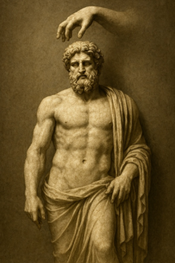
1. «Ποιητής που δουλεύει το μαχαίρι στο ανεξίτηλο τρίτο του χέρι.»
IPA: /pi.iˈtis pu ðuˈlevi to maˈçeri sto anekˈsitilo ˈtrito tu ˈçeri/
English: A poet who works the knife upon his indelible third hand.
2. Πρόκειται για μια από τις πιο πυκνές και συμβολικές εικόνες του Ελύτη.
IPA: /ˈpro.ce.ti ʝa mja apo tis pço piˈknés ce simvoliˈkés iˈkones tu eˈliti/
English: This is one of Elytis’ most dense and symbolic images.
3. Το «τρίτο χέρι» δεν είναι βιολογικό – είναι το χέρι της ποιητικής πράξης, της υπέρβασης, της μυστικής δημιουργίας.
IPA: /to ˈtrito ˈçeri ðen ˈine violoʝiˈko – ˈine to ˈçeri tis pi.i.tiˈkis ˈpraksis, tis iˈpervasis, tis mistiˈkis ðimiurˈʝias/
English: The “third hand” is not biological – it is the hand of poetic action, transcendence, and secret creation.
4. Το «μαχαίρι» εδώ δεν είναι όργανο βίας, αλλά εργαλείο χαραγής, αλήθειας, καθαρής γραφής.
IPA: /to maˈçeri eˈðo ðen ˈine ˈorɣano ˈvías, aˈla erɣaˈlio xaraˈʝis, aˈliθias, kaθaˈris ɣraˈfis/
English: The “knife” here is not an instrument of violence, but a tool of engraving, truth, and pure writing.
5. Ο ποιητής δεν γράφει απλώς – χαράζει στο ανεξίτηλο, στο αιώνιο.
IPA: /o pi.iˈtis ðen ˈɣrafi aˈplos – xaˈrazi sto anekˈsitilo, sto eˈonio/
English: The poet does not merely write – he engraves upon the indelible, upon the eternal.
ΧΑΡΑΚΤΗΡΕΣ
6. Ο Ποιητής – Μορφή εσωστρεφής, με βλέμμα στραμμένο στο άγραφο.
IPA: /o pi.iˈtis – morˈfi eso.streˈfis, me ˈvlema straˈmeno sto ˈaɣrafo/
English: The Poet – An introverted figure, with his gaze fixed on the unwritten.
7. Η Μαθήτρια – Νεαρή, γεμάτη ερωτήσεις και δισταγμούς.
IPA: /i maˈθitria – neaˈri, ʝeˈmati eroˈtisis ce ðistaɣˈmus/
English: The Student – Young, full of questions and hesitations.
8. Η Σκιά – Αόρατη για τη Μαθήτρια, ορατή για το κοινό. Προσωποποίηση της έμπνευσης και του πόνου.
IPA: /i sˈca – aˈorati ʝa ti maˈθitria, oraˈti ʝa to ciˈno. proso.poˈpi.i̯isi tis ˈemvnesis ce tu ˈponu/
English: The Shadow – Invisible to the Student, visible to the audience. A personification of inspiration and pain.
ΘΕΑΤΡΙΚΗ ΣΚΗΝΗ: ΤΟ ΤΡΙΤΟ ΧΕΡΙ
9. Χώρος: Μισοσκότεινο εργαστήρι γραφής…
IPA: /ˈxoros: misoˈskotino erɣaˈstiri ɣraˈfis/
English: Space: A dimly lit writing workshop…
10. Μαθήτρια: Δάσκαλε… γιατί δεν γράφεις όπως όλοι.
IPA: /ˈðaskale… ʝaˈti ðen ˈɣrafis ˈopos ˈoli/
English: Student: Teacher… why don’t you write like everyone else.
11. Γιατί κρατάς το χέρι σου σαν να μην είναι δικό σου;
IPA: /ʝaˈti kraˈtas to ˈçeri su san na min ˈine ðiˈko su/
English: Why do you hold your hand as if it were not your own.
12. Δεν βλέπω τίποτα άλλο πάνω σου εκτός από τα δυο χέρια.
IPA: /ðen ˈvlepo ˈtipota ˈalo ˈpano su ekˈtos apo ta ðjo ˈçerɣa/
English: I see nothing else on you except your two hands.
13. Ποιητής: Γιατί δεν είναι. Το χέρι που γράφει δεν είναι το χέρι που φαίνεται.
IPA: /ʝaˈti ðen ˈine. to ˈçeri pu ˈɣrafi ðen ˈine to ˈçeri pu ˈfenete/
English: Poet: Because it isn’t. The hand that writes is not the hand that appears.
14. Είναι το τρίτο. Το ανεξίτηλο.
IPA: /ˈine to ˈtrito. to anekˈsitilo/
English: It is the third. The indelible one.
15. Το τρίτο δεν φαίνεται. Δεν αγγίζει χαρτί. Δεν κρατά στυλό.
IPA: /to ˈtrito ðen ˈfenete. ðen anˈʝizi xarˈti. ðen kraˈta stiˈlo/
English: The third is unseen. It touches no paper. It holds no pen.
16. Μα είναι εκεί… εκεί που πονάει η λέξη πριν γεννηθεί.
IPA: /ma ˈine eˈci… eˈci pu poˈnai i ˈleksi prin ʝeniˈθi/
English: Yet it is there… where the word hurts before it is born.
17. Μαθήτρια: Και το μαχαίρι; Γιατί το δουλεύεις; Δεν είναι η ποίηση φως;
IPA: /ce to maˈçeri? ʝaˈti to ðuˈlevi̯is? ðen ˈine i ˈpiisi fos/
English: And the knife? Why do you work it? Isn’t poetry light.
18. Ποιητής: Το φως δεν χαρίζεται. Κερδίζεται. Με χάραγμα. Με πληγή.
IPA: /to fos ðen xaˈrizete. kerˈðizete. me ˈxaraɣma. me pliˈʝi/
English: Light is not given. It is earned. Through engraving. Through wound.
19. Το μαχαίρι είναι το εργαλείο της αλήθειας. Δεν κόβει λέξεις. Κόβει το ψέμα που τις σκεπάζει.
IPA: /to maˈçeri ˈine to erɣaˈlio tis aˈliθias. ðen ˈkovi ˈleksis. ˈkovi to ˈpsema pu tis skeˈpazi/
English: The knife is the tool of truth. It does not cut words. It cuts the lie that covers them.
20. Μαθήτρια: Το μαχαίρι; Γιατί χαράζεις; Δεν είναι η ποίηση χάδι;
IPA: /to maˈçeri? ʝaˈti xaˈrazi̯is? ðen ˈine i ˈpiisi ˈxaði/
English: The knife? Why do you carve? Isn’t poetry a caress.
21. Ποιητής: Χάδι είναι μόνο όταν έχεις πρώτα χαράξει.
IPA: /ˈxaði ˈine ˈmono ˈotan ˈexis ˈprota xaˈraksi/
English: It becomes a caress only after you have carved first.
22. Το μαχαίρι δεν κόβει σάρκα. Κόβει σιωπή.
IPA: /to maˈçeri ðen ˈkovi ˈsarka. ˈkovi sjoˈpi/
English: The knife does not cut flesh. It cuts silence.
23. Σκάβει στο ανεξίτηλο. Εκεί που δεν ξεβάφει η αλήθεια.
IPA: /ˈskavi sto anekˈsitilo. eˈci pu ðen kseˈvafi i aˈliθia/
English: It digs into the indelible. Where truth does not fade.
24. Σκιά: Δεν γράφεις με το χέρι. Γράφεις με την απώλεια.
IPA: /ðen ˈɣrafis me to ˈçeri. ˈɣrafis me tin aˈpolia/
English: You do not write with the hand. You write with loss.
25. Με το φως που δεν σε βλέπει. Με το αίμα που δεν στάζει.
IPA: /me to fos pu ðen se ˈvlepi. me to ˈema pu ðen ˈstazi/
English: With the light that does not see you. With the blood that does not drip.
26. Σκιά: Κάθε λέξη που γεννιέται, έχει πρώτα πεθάνει μέσα του.
IPA: /ˈkaθe ˈleksi pu ʝeˈɲete, ˈexi ˈprota peˈθani ˈmesa tu/
English: Every word that is born has first died within him.
27. Μαθήτρια: Θέλω να γράψω κι εγώ. Μα δεν έχω τρίτο χέρι. Δεν έχω μαχαίρι.
IPA: /ˈθelo na ˈɣrapso ciˈɣo. ma ðen ˈexo ˈtrito ˈçeri. ðen ˈexo maˈçeri/
English: I want to write too. But I have no third hand. I have no knife.
28. Ποιητής: Έχεις ταραχή. Έχεις φόβο και σιωπή. Έχεις απορία.
IPA: /ˈexis taraˈçi. ˈexis ˈfo.vo ce sjoˈpi. ˈexis apoˈria/
English: You have turmoil. You have fear and silence. You have wonder.
29. Δούλεψέ τα. Και θα γεννηθεί το χέρι που αιωρείται πάνω από το κεφάλι σου.
IPA: /ˈðulepse ta. ce θa ʝeniˈθi to ˈçeri pu e.oˈrite ˈpano apo to ceˈfali su/
English: Work them. And the hand that hovers above your head will be born.
1. Ένα θεατρικό διάλογο εμπνευσμένο από το ποίημα «Τα Κεριά» του Κ.Π. Καβάφη δίνει την αίσθηση του χρόνου που περνά, της μνήμης και της απώλειας, μέσα από τρία πρόσωπα που συνομιλούν σε μια σκηνή φωτισμένη μόνο από φλόγες κεριών.
IPA:
/ˈena θeaˈtriko ðiˈaloɣo emvneˈsmeno apo to ˈpiima ta ceˈrʝa tu kaˈvafi ðini tin eˈsis̠isi tu ˈxronu pu perˈna, tis ˈmnimis ke tis aˈpolias, ˈmesa apo ˈtria ˈprosopa pu sonoˈmilun se mia skiˈni fotisˈmeni ˈmono apo ˈfloʝes ceˈrion/
English:
A theatrical dialogue inspired by Cavafy’s poem “The Candles” conveys the sense of passing time, memory, and loss, through three characters who converse on a stage lit only by candle flames.
2. «Φλόγες και Σκιές» Διάλογος για τρία πρόσωπα Δημήτρης, Σοφία και Νεφέλη.
IPA:
/ˈfloʝes ce s̠ciˈes ðiˈaloɣos ʝa ˈtria ˈprosopa ðiˈmitris, soˈfia ce neˈfeli/
English:
“Flames and Shadows” – A dialogue for three characters: Dimitris, Sofia, and Nefeli.
🌑 ΣΚΗΝΗ Α’
3. Σκηνικό: Ένα σκοτεινό δωμάτιο.
IPA: /skiˈniko: ˈena skotiˈno ðoˈmatio/
English: Setting: A dark room.
4. Στο κέντρο, ένα τραπέζι με αναμμένα κεριά.
IPA: /sto ˈcentro, ˈena traˈpezi me anameˈna ceˈrʝa/
English: At the center, a table with lit candles.
5. Η Σοφία στέκεται μπροστά τους.
IPA: /i soˈfia ˈstekete broˈsta tus/
English: Sofia stands before them.
6. Ο Δημήτρης μπαίνει αθόρυβα.
IPA: /o ðiˈmitris ˈbeni aˈθoriva/
English: Dimitris enters quietly.
7. Δημήτρης: (παρατηρεί τα κεριά) Πόσα άναψες απόψε;
IPA: /ˈposa ˈanapses aˈpopse/
English: Dimitris: (observing the candles) How many did you light tonight?
8. Σοφία: Όσα χωρούσαν οι αναμνήσεις. Κάθε φλόγα, κι ένα χθες.
IPA:
/ˈosa xoˈrusan i anamˈnisis. ˈkaθe ˈfloɣa, ci ˈena xθes/
English:
Sofia: As many as the memories could hold. Each flame, a yesterday.
9. Δημήτρης: Κι οι σβησμένες; Δεν τις βλέπω πια.
IPA:
/ci izviˈzmenes? ðen tis ˈvlepo pça/
English:
Dimitris: And the extinguished ones? I don’t see them anymore.
10. Σοφία: Δεν τις βλέπεις, αλλά τις νιώθεις. Είναι πίσω μας. Σαν τις σκιές που δεν φεύγουν.
IPA:
/ðen tis ˈvlepis, aˈla tis ˈɲoθis. ˈine ˈpiso mas. san tis s̠ciˈes pu ðen ˈfevɣun/
English:
Sofia: You don’t see them, but you feel them. They’re behind us. Like shadows that never leave.
11. Δημήτρης: (πλησιάζει) Μου λείπουν οι μέρες που δεν ήξερα τι σημαίνει απώλεια.
IPA:
/mu ˈlipun i ˈmeres pu ðen ˈiksera ti siˈmeni aˈpolia/
English:
Dimitris: (approaching) I miss the days when I didn’t know what loss meant.
12. Σοφία: Μα τότε δεν ήξερες ούτε τι σημαίνει μνήμη. Τώρα ξέρεις. Και πληρώνεις το τίμημα.
IPA:
/ma ˈtote ðen ˈikseres ˈute ti siˈmeni ˈmnimi. ˈtora ˈkseris. ce pliˈronis to ˈtimima/
English:
Sofia: But then you didn’t know what memory meant either. Now you know. And you pay the price.
13. Δημήτρης: (παίρνει ένα κερί και το σβήνει) Αν σβήσω αυτό, θα ξεχάσω;
IPA:
/an ˈzviso aˈfto, θa kseˈxaso/
English:
Dimitris: (takes a candle and extinguishes it) If I put this out, will I forget?
14. Σοφία: Όχι. Θα θυμάσαι πιο σιωπηλά.
IPA:
/ˈoxi. θa θiˈmase pço sjo.piˈla/
English:
Sofia: No. You’ll remember more quietly.
15. Δημήτρης: (χαμογελά πικρά) Τα κεριά μπροστά μας είναι το αύριο. Τα πίσω, το χθες. Κι εμείς, ανάμεσα.
IPA:
/ta ceˈrʝa broˈsta mas ˈine to ˈavrio. ta ˈpiso, to xθes. ci eˈmis, aˈnamesa/
English:
Dimitris: (bitter smile) The candles before us are tomorrow. The ones behind, yesterday. And we, in between.
16. Σοφία: Ακριβώς. Μην κοιτάς πίσω. Δεν έχει φως εκεί πια.
IPA:
/akriˈvos. min kiˈtas ˈpiso. ðen ˈexi fos eˈci pça/
English:
Sofia: Exactly. Don’t look back. There’s no light there anymore.
17. Δημήτρης: Κι αν το φως ήταν η ίδια η μνήμη;
IPA:
/ci an to fos ˈitan i ˈiðia i ˈmnimi/
English:
Dimitris: And what if the light was memory itself?
18. Σοφία: Τότε να την κουβαλάς σαν φλόγα. Όχι σαν βάρος.
IPA:
/ˈtote na tin kuvaˈlas san ˈfloɣa. ˈoxi san ˈvaros/
English:
Sofia: Then carry it like a flame. Not like a burden.
🔥 ΣΚΗΝΗ Β’ – Η ΜΝΗΜΗ ΚΑΙ Η ΕΠΙΛΟΓΗ
19. Ίδια σκηνή. Τα κεριά έχουν λιγοστέψει.
IPA:
/ˈiðia skiˈni. ta ceˈrʝa ˈexun liɣoˈstepsi/
English:
Same scene. The candles have dwindled.
20. Ακούγεται χαμηλά ένα παλιό ελληνικό τραγούδι…
IPA:
/aˈkuʝete xamiˈla ˈena paˈljo eliniˈko traˈɣuði/
English:
A faint old Greek song is heard…
21. Σοφία: Ξέρεις… μερικά κεριά δεν τα σβήνει ο χρόνος. Τα σβήνουμε εμείς. Από φόβο.
IPA:
/ˈkseris… meriˈka ceˈrʝa ðen ta ˈzvini o ˈxronos. ta ˈzvinume eˈmis. apo ˈfo.vo/
English:
Sofia: You know… some candles aren’t extinguished by time. We extinguish them. Out of fear.
22. Δημήτρης: Ή από ανάγκη. Δεν αντέχουμε να τα βλέπουμε να καίγονται.
IPA:
/i apo aˈnaɲi. ðen anˈdexume na ta ˈvlepume na ˈceɣonde/
English:
Dimitris: Or out of necessity. We can’t bear to watch them burn.
23. Σοφία: Κι όμως, η φλόγα τους είναι η μόνη αλήθεια που δεν αλλάζει.
IPA:
/ci ˈomos, i ˈfloɣa tus ˈine i ˈmoni aˈliθia pu ðen aˈlaʝi/
English:
Sofia: And yet, their flame is the only truth that doesn’t change.
24. Δημήτρης: Θυμάσαι εκείνη τη μέρα στο παλιό σχολείο; Που ανάψαμε κεριά για τους δασκάλους που έφυγαν;
IPA:
/θiˈmase eˈcini ti ˈmera sto paˈljo sxoˈlio? pu aˈnapsame ceˈrʝa ʝa tus ðaˈskaluz pu ˈefiɣan/
English:
Dimitris: Do you remember that day at the old school? When we lit candles for the teachers who passed away?
25. Σοφία: Θυμάμαι. Και θυμάμαι και τα πρόσωπα των παιδιών. Δεν καταλάβαιναν το τελετουργικό. Μα ένιωθαν κάτι.
IPA:
/θiˈmame. ce θiˈmame ce ta ˈprosopa ton peˈðion. ðen kataˈlavena to teleturniˈko. ma ˈenʝoθan ˈkati/
English:
Sofia: I remember. And I remember the children’s faces. They didn’t understand the ritual. But they felt something.
26. Δημήτρης: Ίσως αυτό είναι η μνήμη. Όχι η γνώση, αλλά η αίσθηση.
IPA:
/ˈisos afˈto ˈine i ˈmnimi. ˈoxi i ˈɣnosi, aˈla i ˈesis̠i/
English:
Dimitris: Maybe that is memory. Not knowledge, but feeling.
27. Σοφία: Κι εμείς, οι φύλακες των αισθήσεων. Όχι των γεγονότων.
IPA:
/ci eˈmis, i ˈfilakes ton eˈsθison. ˈoxi ton ʝeɣoˈnoton/
English:
Sofia: And we, the guardians of feelings. Not of events.
28. Δημήτρης: (ανάβει κερί) Για όσα δεν ειπώθηκαν. Για όσα δεν θα ξεχαστούν.
IPA:
/ʝa ˈosa ðen iˈpoθikan. ʝa ˈosa ðen θa ksexaˈstun/
English:
Dimitris: For what was never spoken. For what will never be forgotten.
29. Σοφία: Κι αν αύριο δεν έχουμε φλόγες; Τι θα κάνουμε;
IPA:
/ci an ˈavrio ðen ˈexume ˈfloɣes? ti θa ˈkanume/
English:
Sofia: And if tomorrow we have no flames? What will we do?
30. Δημήτρης: Θα γίνουμε εμείς τα κεριά. Θα καούμε για να φωτίσουμε.
IPA:
/θa ˈʝinume eˈmis ta ceˈrʝa. θa kaˈume ʝa na foˈtisume/
English:
Dimitris: Then we will become the candles. We will burn to give light.
✨ ΣΚΗΝΗ Γ’ – Η ΦΛΟΓΑ ΠΟΥ ΜΑΘΑΙΝΕΙ
31. Το δωμάτιο είναι πιο σκοτεινό. Μερικά κεριά έχουν λιώσει.
IPA:
/to ðoˈmatio ˈine pço skotiˈno. meriˈka ceˈrʝa ˈexun ʎoˈsi/
English:
The room is darker. Some candles have melted.
32. Ακούγεται μακρινά ένα παιδικό τραγούδι.
IPA:
/aˈkuʝete makriˈna ˈena peðiˈko traˈɣuði/
English:
A distant children’s song is heard.
33. Νεφέλη: Συγγνώμη… μπορώ να μπω; Είδα το φως από το διάδρομο.
IPA:
/siɣˈnomi… boˈro na bo? ˈiða to fos apo to ˈðjaðromo/
English:
Nefeli: Excuse me… may I come in? I saw the light from the hallway.
34. Σοφία: Το φως είναι για όλους. Έλα.
IPA:
/to fos ˈine ʝa ˈolus. ˈela/
English:
Sofia: The light is for everyone. Come.
35. Δημήτρης: Δεν συνηθίζουμε επισκέψεις τέτοια ώρα.
IPA:
/ðen siniˈθizume episˈcepsis ˈtetça ˈora/
English:
Dimitris: We don’t usually have visitors at this hour.
36. Νεφέλη: Γιατί ανάβετε κεριά; Δεν έχουμε ρεύμα;
IPA:
/ʝaˈti aˈnavete ceˈrʝa? ðen ˈexume ˈrevma/
English:
Nefeli: Why are you lighting candles? Do we not have electricity?
37. Σοφία: Έχουμε. Μα αυτά τα κεριά δεν είναι για να βλέπουμε. Είναι για να θυμόμαστε.
IPA:
/ˈexume. ma aˈfta ta ceˈrʝa ðen ˈine ʝa na ˈvlepume. ˈine ʝa na θiˈmomaste/
English:
Sofia: We do. But these candles aren’t for seeing. They’re for remembering.
38. Νεφέλη: Και τι θυμάστε;
IPA:
/ce ti θiˈmaste/
English:
Nefeli: And what do you remember?
39. Δημήτρης: Τους ανθρώπους που μας έμαθαν να σκεφτόμαστε. Τις στιγμές που μας έκαναν να νιώσουμε. Τις λέξεις που δεν ειπώθηκαν ποτέ.
IPA:
/tus anˈθropus pu mas ˈemathan na s̠ceftoˈmaste. tis stiɣˈmes pu mas ˈekanan na ˈɲosume. tis ˈleksis pu ðen iˈpoθikan poˈte/
English:
Dimitris: The people who taught us to think. The moments that made us feel. The words that were never spoken.
Σκηνή: Το βασίλειο του Άδη.
IPA: /to vasiˈlio tu ˈaði/
English: Scene: The kingdom of Hades.
Ο Σίσυφος… πλησιάζει τον θρόνο του Πλούτωνα.
IPA: /o ˈsisifos plisiˈazi ton ˈθrono tu ˈplutona/
English: Sisyphus approaches the throne of Pluto.
🗣️ ΣΙΣΥΦΟΣ
Ὦ Πλούτων, βασιλεὺς τῆς σιγῆς καὶ τοῦ σκότους…
IPA:
/o ˈpluton, vasiˈlefs tis siˈjis ce tu ˈskotus/
English:
O Pluto, king of silence and darkness…
ἄκουσον τὴν φωνὴν μου…
IPA: /ˈakusun tin foˈnin mu/
English: Hear my voice…
ὅχι ὡς ἁμαρτωλός, ἀλλ’ ὡς ἄνθρωπος ποὺ ἔμαθε τὸ βάρος τῆς πλάνης.
IPA:
/ˈoxi os amar.toˈlos, al os ˈanθropos pu ˈemaθe to ˈvaros tis ˈplanis/
English:
Not as a sinner, but as a man who has learned the weight of his delusion.
ἡ Μερόπη… σπονδὰς ἔχυσεν μὲ δάκρυα καὶ θυμίαμα…
IPA:
/i meˈropi sponˈðas ˈexisen me ˈðakria ce θiˈmia.ma/
English:
Meropê poured libations with tears and incense…
Ἐὰν ἔχει ἡ ἀγάπη δύναμιν, ἄφες με νὰ ἀναβῶ.
IPA:
/eˈan ˈexi i aˈɣapi ˈðinamin, ˈafes me na anaˈvo/
English:
If love has power, allow me to ascend.
👑 ΠΛΟΥΤΩΝ
Σίσυφε, τέκνον τῆς ἀνθρώπινης πανουργίας…
IPA:
/ˈsisife, ˈteknon tis anˈθropinis panurˈʝias/
English:
Sisyphus, child of human cunning…
ὁ λίθος σου ἀκόμη κυλίει στὸν κύκλο τῆς μοίρας.
IPA:
/o ˈliθos su aˈkomi ciˈli.i ston ˈciklo tis ˈmiras/
English:
Your stone still rolls in the circle of fate.
Τί σὲ κάμνει νὰ πιστεύεις…;
IPA:
/ti se ˈkamni na piˈstevis/
English:
What makes you believe…?
🗣️ ΣΙΣΥΦΟΣ
Οὐχὶ ἡ σπονδὴ μόνον, ἀλλὰ ἡ μεταμέλεια.
IPA:
/uˈxi i sponˈði ˈmonon, aˈla i metaˈmelia/
English:
Not the offering alone, but repentance.
Ἐὰν ὁ Ἄδης εἶναι μόνον τιμωρία… ποῦ εἶναι ἡ δικαιοσύνη;
IPA:
/eˈan o ˈaðis ˈine ˈmonon timoˈria… pu ˈine i ði.ce.oˈsini/
English:
If Hades is only punishment… where is the justice of the gods?
👑 ΠΛΟΥΤΩΝ
Ἐντάξει. Μίαν ἡμέραν θὰ σοῦ δοθῇ.
IPA:
/enˈdaksi. ˈmian iˈmeran θa su ðoˈθi/
English:
Very well. One day shall be granted to you.
Ἀλλ’ ἂν τὸ ψεῦδος ἐπιστρέψῃ… ὁ λίθος θὰ σε περιμένῃ.
IPA:
/al an to ˈpsevðos episˈtrepsi… o ˈliθos θa se periˈmeni/
English:
But if falsehood returns to your tongue… the stone will await you.
🗣️ ΣΙΣΥΦΟΣ
ἡ ἀλήθεια θὰ εἶναι ὁ νέος μου λίθος.
IPA:
/i aˈliθia θa ˈine o ˈneos mu ˈliθos/
English:
Truth shall be my new stone.
🏛️ ΣΚΗΝΗ Β’ — ΧΟΡΟΣ ΨΥΧΩΝ
Ὦ σκιὰ τῆς ζωῆς… στὸν Ἄδη κυλᾷ ὁ χρόνος ἀργά.
IPA:
/o s̠ciˈa tis zoˈis… ston ˈaði ciˈle o ˈxronos arˈɣa/
English:
O shadow of life… in Hades time flows slowly.
Ἔχει ἡ σπονδὴ δύναμιν νὰ λύσῃ τὴν μοῖραν;
IPA:
/ˈexi i sponˈði ˈðinamin na ˈlisi tin ˈmiran/
English:
Does an offering have the power to break fate?
📜 ΣΚΗΝΗ Γ’ — ΑΓΓΕΛΙΑΦΟΡΟΣ
Ἄκουσα φωνὴν ἀπὸ τὸν ἄνω κόσμον…
IPA:
/ˈakusa foˈnin apo ton ˈano ˈkozmon/
English:
I heard a voice from the upper world…
«Ἐὰν ἡ ἀγάπη δὲν ἀκούεται… τί ἀξία ἔχει ἡ σπονδὴ;»
IPA:
/eˈan i aˈɣapi ðen aˈkuete… ti aˈksia ˈexi i sponˈði/
English:
“If love is not heard… what worth has the offering?”
⚡ ΣΚΗΝΗ Δ’ — ΕΡΜΗΣ
Διὰ μίαν ἡμέραν, ὁ Σίσυφος θὰ ἀναβῇ.
IPA:
/ðia ˈmian iˈmeran o ˈsisifos θa anaˈvi/
English:
For one day, Sisyphus shall ascend.
Ἐὰν ψεύσῃ… ὁ λίθος θὰ γίνει βαρύς ὡς κόσμος.
IPA:
/eˈan ˈpsefsi… o ˈliθos θa ˈʝini vaˈris os ˈkozmos/
English:
If he lies… the stone will become heavy as a world.
🌌 ΣΚΗΝΗ Ε’ — ΦΩΝΗ ΜΕΡΟΠΗΣ
Σίσυφε, ἄνδρα μου… Ἔλα πίσω, ἀλλ’ ὄχι ὡς παλαιός…
IPA:
/ˈsisife ˈandra mu… ˈela ˈpiso al ˈoxi os palaˈjos/
English:
Sisyphus, my husband… return, but not as before…
ἀλλ’ ὡς καινὸς, καθαρὸς, ἀληθινός.
IPA:
/al os ceˈnos, kaθaˈros, aliθiˈnos/
English:
but as new, pure, and true.
🎭 ΣΚΗΝΗ ΣΤ’ — ΕΞΟΔΟΣ ΣΙΣΥΦΟΥ
Ἐπὶ τῆς γῆς θὰ βαδίσω μὲ φῶς…
IPA:
/epi tis ʝis θa vaˈðiso me fos/
English:
Upon the earth I shall walk with light…
Ἡ Μερόπη ἔσωσε τὴν ψυχήν μου…
IPA:
/i meˈropi ˈesose tin psiˈxin mu/
English:
Meropê saved my soul…
🏛️ ΧΟΡΟΣ — ἘΞΟΔΙΟΝ
Ἡ ἀγάπη νικᾷ τὸν θάνατον…
IPA:
/i aˈɣapi niˈke ton ˈθanaton/
English:
Love conquers death…
Ὁ Σίσυφος ἀναβαίνει, μὲ φῶς στὴν καρδιὰ καὶ ὄρκο στὰ χείλη.
IPA:
/o ˈsisifos anavaˈni, me fos stin karˈðja ce ˈorko sta ˈçili/
English:
Sisyphus rises, with light in his heart and an oath upon his lips.
🏛️ Φιλοσοφικός διάλογος: Πλάτων & Αριστοτέλης για την Τύχη και το Πεπρωμένο
Greek → English + Greek phonetics
Πλάτων:
Αριστοτέλη, συχνά αναρωτιέμαι αν η ζωή μας είναι γραμμένη από πριν… ή αν την γράφουμε εμείς με τις πράξεις μας.
a-ri-sto-TÉ-li, si-HNÁ a-na-ro-ti-É-me an i zo-Í mas Í-ne gra-MÉ-ni a-po prin… í an tin GRÁ-fu-me e-MÍS me tis PRÁ-xis mas
Plato:
Aristotle, I often wonder whether our lives are written beforehand… or whether we write them ourselves through our actions.
Αριστοτέλης:
Δάσκαλε, το πεπρωμένο ίσως είναι απλώς η τάξη του κόσμου. Αλλά η τάξη δεν αναιρεί την επιλογή.
DÁ-ska-le, to pe-pro-MÉ-no Í-sos Í-ne a-PLÓS i TÁ-xi tu KÓZ-mu — a-LÁ i TÁ-xi then a-na-rÍ tin e-pi-lo-GÍ
Aristotle:
Master, destiny may simply be the order of the world. But order does not cancel choice.
Πλάτων:
Κι όμως… πολλοί άνθρωποι νιώθουν πως η τύχη κυβερνά τα πάντα.
KI Ó-mos… po-LÍ án-thro-pi NÝ-o-thun pos i TÍ-chi ki-ver-NÁ ta PÁN-ta
Plato:
And yet… many people feel that chance governs everything.
Αριστοτέλης:
Η τύχη, Πλάτωνα, είναι απλώς το όνομα που δίνουμε σε ό,τι δεν κατανοούμε.
i TÍ-chi, PLÁ-to-na, Í-ne a-PLÓS to Ó-no-ma pu DÍ-nu-me se Ó-ti then ka-ta-no-U-ME
Aristotle:
Chance, Plato, is merely the name we give to what we do not understand.
Πλάτων:
Ίσως. Αλλά δεν μπορείς να αρνηθείς πως υπάρχουν στιγμές που μοιάζουν προκαθορισμένες.
Í-sos — a-LÁ then bo-RÍS na ar-ni-THÍS pos i-PÁR-hun sti-GMÉS pu MIÁ-zun pro-ka-tho-ri-SMÉ-nes
Plato:
Perhaps. But you cannot deny that some moments feel predetermined.
Αριστοτέλης:
Προκαθορισμένες… ή απλώς αναπόφευκτες;
pro-ka-tho-ri-SMÉ-nes… í a-PLÓS a-na-PÓ-fef-ktes
Aristotle:
Predetermined… or simply inevitable?
Πλάτων:
Και ποια η διαφορά;
ke pi-Á i dia-fo-RÁ
Plato:
And what is the difference?
Αριστοτέλης:
Το αναπόφευκτο γεννιέται από τις επιλογές μας. Το προκαθορισμένο… από κάτι έξω από εμάς.
to a-na-PÓ-fef-kto ye-NÉ-te a-po tis e-pi-lo-YÉS mas — to pro-ka-tho-ri-SMÉ-no… a-po KÁ-ti É-xo a-po e-MÁS
Aristotle:
The inevitable is born from our choices. The predetermined… from something outside us.
Πλάτων:
Κι αν αυτό το “έξω από εμάς” είναι η ψυχή μας πριν γεννηθεί;
ki an af-TÓ to “É-xo a-po e-MÁS” Í-ne i psi-HÍ mas prin yen-ni-THÍ
Plato:
And what if that “outside us” is our soul before it is born?
Αριστοτέλης:
Τότε το πεπρωμένο δεν είναι φυλακή, αλλά μνήμη.
TÓ-te to pe-pro-MÉ-no then Í-ne fi-la-KÍ, a-LÁ MNÍ-mi
Aristotle:
Then destiny is not a prison, but a memory.
Πλάτων:
Μια μνήμη που μας οδηγεί;
mia MNÍ-mi pu mas o-di-YÍ
Plato:
A memory that guides us?
Αριστοτέλης:
Μια μνήμη που μας καλεί να γίνουμε αυτό που μπορούμε να είμαστε.
mia MNÍ-mi pu mas ka-LÍ na YÍ-nu-me af-TÓ pu bo-RÚ-me na Í-mas-te
Aristotle:
A memory calling us to become what we are capable of being.
Πλάτων:
Άρα… η τύχη είναι ο άνεμος. Το πεπρωμένο το ρεύμα. Και η επιλογή… το πηδάλιο.
Á-ra… i TÍ-chi Í-ne o Á-ne-mos — to pe-pro-MÉ-no to RÉV-ma — ke i e-pi-lo-GÍ… to pi-THÁ-lio
Plato:
So… chance is the wind. Destiny the current. And choice… the rudder.
Αριστοτέλης:
Και ο άνθρωπος;
ke o Án-thro-pos
Aristotle:
And the human being?
Πλάτων:
Ο άνθρωπος είναι ο ναυτικός.
o Án-thro-pos Í-ne o naf-ti-KÓS
Plato:
The human being is the sailor.
Αριστοτέλης:
Τότε ας μάθουμε να ταξιδεύουμε.
TÓ-te as MÁ-thu-me na ta-xi-THÉ-vu-me
Aristotle:
Then let us learn to sail.
🏛️ Φιλοσοφικός διάλογος: Πλάτων & Αριστοτέλης για την Αρετή
Greek → English + Greek phonetics
Πλάτων:
Αριστοτέλη, συχνά αναρωτιέμαι… η αρετή είναι κάτι που γεννιέται μέσα μας ή κάτι που μαθαίνεται;
a-ri-sto-TÉ-li, si-HNÁ a-na-ro-ti-É-me… i a-re-TÍ Í-ne KÁ-ti pu ye-NÉ-te MÉ-sa mas í KÁ-ti pu ma-THÉ-ne-te
Plato:
Aristotle, I often wonder… is virtue something born within us or something we learn?
Αριστοτέλης:
Δάσκαλε, η αρετή δεν είναι ούτε δώρο ούτε τύχη. Είναι συνήθεια. Είναι πράξη.
DÁ-ska-le, i a-re-TÍ then Í-ne Ú-te THÓ-ro Ú-te TÍ-chi — Í-ne si-NÍ-thi-a — Í-ne PRÁ-xi
Aristotle:
Master, virtue is neither a gift nor luck. It is habit. It is action.
Πλάτων:
Κι όμως… πώς μπορεί κάποιος να πράξει το καλό, αν δεν γνωρίζει τι είναι το καλό;
KI Ó-mos… POS bo-RÍ KÁ-pios na PRÁ-xi to ka-LÓ, an then gno-RÍ-zi ti Í-ne to ka-LÓ
Plato:
And yet… how can someone do good if they do not know what good is?
Αριστοτέλης:
Μα η γνώση δεν αρκεί. Πολλοί γνωρίζουν το καλό, αλλά δεν το πράττουν.
ma i GNÓ-si then ar-KÍ — po-LÍ gno-RÍ-zun to ka-LÓ, a-LÁ then to PRÁ-tun
Aristotle:
Knowledge is not enough. Many know the good, yet do not do it.
Πλάτων:
Ίσως γιατί η ψυχή τους δεν έχει στραφεί προς το φως.
Í-sos ya-TÍ i psi-HÍ tus then É-chi stra-FÍ pros to fos
Plato:
Perhaps because their soul has not turned toward the light.
Αριστοτέλης:
Ή γιατί δεν έχουν ασκηθεί. Η αρετή είναι όπως ο μυς: δυναμώνει με άσκηση.
Í ya-TÍ then É-hun a-ski-THÍ — i a-re-TÍ Í-ne Ó-pos o MIS: di-na-MÓ-ni me Á-ski-si
Aristotle:
Or because they have not trained. Virtue is like a muscle: it strengthens with exercise.
Πλάτων:
Και τι είναι, λοιπόν, η αρετή;
ke ti Í-ne li-PÓN, i a-re-TÍ
Plato:
Then what is virtue?
Αριστοτέλης:
Το να βρίσκεις το μέτρο. Το να πράττεις το σωστό, τη σωστή στιγμή, με τον σωστό τρόπο.
to na VRÍ-skis to MÉ-tro — to na PRÁ-ttis to so-STÓ, ti so-STÍ sti-GMÍ, me ton so-STÓ TRÓ-po
Aristotle:
Finding the mean. Doing the right thing, at the right time, in the right way.
Πλάτων:
Και η ψυχή; Δεν έχει ρόλο;
ke i psi-HÍ? then É-chi RÓ-lo
Plato:
And the soul? Has it no role?
Αριστοτέλης:
Έχει. Η ψυχή επιλέγει. Αλλά το σώμα εκτελεί. Και η αρετή χρειάζεται και τα δύο.
É-chi — i psi-HÍ e-pi-LÉ-yi — a-LÁ to SÓ-ma ek-te-LÍ — ke i a-re-TÍ hri-A-ZÉ-te ke ta THÍ-o
Aristotle:
It does. The soul chooses. But the body acts. And virtue requires both.
Πλάτων:
Άρα… η αρετή είναι αρμονία;
Á-ra… i a-re-TÍ Í-ne ar-mo-NÍ-a
Plato:
So… virtue is harmony?
Αριστοτέλης:
Αρμονία ανάμεσα στο θέλω και στο πρέπει.
ar-mo-NÍ-a a-NÁ-me-sa sto THÉ-lo ke sto PRÉ-pi
Aristotle:
Harmony between what we want and what we ought to do.
Πλάτων:
Και ποιος είναι ο ενάρετος άνθρωπος;
ke PI-os Í-ne o e-NÁ-re-tos Án-thro-pos
Plato:
And who is the virtuous person?
Αριστοτέλης:
Αυτός που δεν χρειάζεται μάρτυρες για να πράξει το καλό.
aft-ÓS pu then hri-A-ZÉ-te MÁr-ti-res ya na PRÁ-xi to ka-LÓ
Aristotle:
The one who needs no witnesses to do what is right.
Πλάτων:
Τότε… η αρετή είναι η πιο αθόρυβη μορφή σοφίας.
TÓ-te… i a-re-TÍ Í-ne i pio a-THÓ-ri-vi mor-FÍ so-FÍ-as
Plato:
Then… virtue is the quietest form of wisdom.
Αριστοτέλης:
Και η πιο δύσκολη.
ke i pio DÍ-sko-li
Aristotle:
And the hardest.
Φιλοσοφικός διάλογος: Πλάτων & Αριστοτέλης για την Αγάπη
Greek → English + Greek phonetics
Πλάτων:
Αριστοτέλη, συχνά λέω πως η αγάπη είναι μια ανάμνηση της ψυχής. Κάτι που είδαμε πριν γεννηθούμε… και το αναζητούμε στη ζωή.
a-ri-sto-TÉ-li, si-HNÁ LÉ-o pos i a-GÁ-pi Í-ne mia a-NÁ-mni-si tis psi-HÍS — KÁ-ti pu Í-da-me prin yen-ni-THÚ-me… ke to a-na-zi-TÚ-me sti zo-Í
Plato:
Aristotle, I often say that love is a memory of the soul. Something we saw before we were born… and seek again in life.
Αριστοτέλης:
Δάσκαλε, για μένα η αγάπη δεν είναι ανάμνηση. Είναι κίνηση. Είναι η ψυχή που τείνει προς το καλό.
DÁ-ska-le, ya MÉ-na i a-GÁ-pi then Í-ne a-NÁ-mni-si — Í-ne KÍ-ni-si — Í-ne i psi-HÍ pu TÍ-ni pros to ka-LÓ
Aristotle:
Master, for me love is not memory. It is movement. It is the soul reaching toward the good.
Πλάτων:
Και τι είναι αυτό το “καλό” που αναζητά η ψυχή;
ke ti Í-ne af-TÓ to “ka-LÓ” pu a-na-zi-TÁ i psi-HÍ
Plato:
And what is this “good” the soul seeks?
Αριστοτέλης:
Είναι η τελείωση. Η πραγμάτωση του δυνατού. Η αγάπη είναι η δύναμη που μας ωθεί να γίνουμε αυτό που μπορούμε να είμαστε.
Í-ne i te-LÍ-o-si — i pra-GMÁ-to-si tu thi-na-TÚ — i a-GÁ-pi Í-ne i DÍ-na-mi pu mas o-THÍ na YÍ-nu-me af-TÓ pu bo-RÚ-me na Í-mas-te
Aristotle:
It is completion. The realization of potential. Love is the force that pushes us to become what we are capable of being.
Πλάτων:
Άρα… η αγάπη είναι πορεία προς το ιδεώδες;
Á-ra… i a-GÁ-pi Í-ne po-RÍ-a pros to i-the-Ó-des
Plato:
So… love is a journey toward the ideal?
Αριστοτέλης:
Ναι. Αλλά όχι μόνο προς το ιδεώδες του άλλου. Και προς το ιδεώδες του εαυτού.
NE — a-LÁ Ó-chi MÓ-no pros to i-the-Ó-des tu Á-lu — ke pros to i-the-Ó-des tu e-af-TÚ
Aristotle:
Yes. But not only toward the ideal of the other. Toward the ideal of oneself as well.
Πλάτων:
Κι όμως… η αγάπη μοιάζει πάντα να μας υπερβαίνει. Σαν να είναι κάτι μεγαλύτερο από δύο ανθρώπους.
KI Ó-mos… i a-GÁ-pi MIÁ-zi PÁN-ta na mas i-per-VA-NEI — san na Í-ne KÁ-ti me-ga-LÍ-te-ro a-po THÍ-o an-THRO-pus
Plato:
And yet… love always seems to exceed us. As if it is something greater than two people.
Αριστοτέλης:
Ίσως γιατί η αγάπη δεν είναι “δύο”. Είναι “ένα” που γεννιέται από δύο.
Í-sos ya-TÍ i a-GÁ-pi then Í-ne “THÍ-o” — Í-ne “É-na” pu ye-NÉ-te a-po THÍ-o
Aristotle:
Perhaps because love is not “two”. It is “one” born from two.
Πλάτων:
Και αυτό το “ένα”… είναι η ενότητα;
ke af-TÓ to “É-na”… Í-ne i e-NÓ-ti-ta
Plato:
And this “one”… is unity?
Αριστοτέλης:
Είναι η συμφωνία των ψυχών. Όχι η ομοιότητα, αλλά η αρμονία.
Í-ne i sim-fo-NÍ-a ton psi-HÓN — Ó-chi i o-mi-Ó-ti-ta, a-LÁ i ar-mo-NÍ-a
Aristotle:
It is the concord of souls. Not sameness, but harmony.
Πλάτων:
Και τι χρειάζεται για να υπάρξει αυτή η αρμονία;
ke ti hri-A-ZÉ-te ya na i-PÁR-xi af-TÍ i ar-mo-NÍ-a
Plato:
And what is needed for such harmony to exist?
Αριστοτέλης:
Αρετή. Χωρίς αρετή, η αγάπη γίνεται πάθος. Με αρετή, γίνεται φως.
a-re-TÍ — ho-RÍS a-re-TÍ i a-GÁ-pi YÍ-ne-te PÁ-thos — me a-re-TÍ YÍ-ne-te fos
Aristotle:
Virtue. Without virtue, love becomes passion. With virtue, it becomes light.
Πλάτων:
Τότε… η αγάπη είναι η πιο φωτεινή μορφή φιλοσοφίας.
TÓ-te… i a-GÁ-pi Í-ne i pio fo-tei-NÍ mor-FÍ fi-lo-so-FÍ-as
Plato:
Then… love is the brightest form of philosophy.
Αριστοτέλης:
Και η πιο ανθρώπινη.
ke i pio an-THRÓ-pi-ni
Aristotle:
And the most human.
Πλάτων & Αριστοτέλης — Διάλογος για την Αγάπη ως Φιλοσοφική Έννοια
Greek → English + Greek phonetics
Πλάτων:
Αριστοτέλη, η αγάπη μοιάζει με φλόγα που δεν καίει, αλλά φωτίζει. Πιστεύεις πως είναι θεϊκή ή ανθρώπινη;
a-ri-sto-TÉ-li, i a-GÁ-pi MIÁ-zi me FLÓ-ga pu then KÉ-i, a-LÁ fo-TÍ-zi — pi-STÉ-vis pos Í-ne the-i-KÍ í an-THRÓ-pi-ni
Plato:
Aristotle, love resembles a flame that does not burn, but illuminates. Do you believe it is divine or human?
Αριστοτέλης:
Ίσως είναι και τα δύο. Θεϊκή στην προέλευση, ανθρώπινη στην πράξη.
Í-sos Í-ne ke ta THÍ-o — the-i-KÍ stin pro-É-lef-si, an-THRÓ-pi-ni stin PRÁ-xi
Aristotle:
Perhaps it is both. Divine in origin, human in action.
Πλάτων:
Και τι είναι αυτό που κάνει την αγάπη τόσο ισχυρή;
ke ti Í-ne af-TÓ pu KÁ-ni tin a-GÁ-pi TÓ-so i-schi-RÍ
Plato:
And what makes love so powerful?
Αριστοτέλης:
Το ότι μας μεταμορφώνει. Η αγάπη δεν μας αφήνει όπως μας βρήκε.
to Ó-ti mas me-ta-mor-FÓ-ni — i a-GÁ-pi then mas a-FÍ-ni Ó-pos mas VRÍ-ke
Aristotle:
The fact that it transforms us. Love never leaves us as it found us.
Πλάτων:
Άρα… η αγάπη είναι μια μορφή παιδείας;
Á-ra… i a-GÁ-pi Í-ne mia mor-FÍ pe-thi-Í-as
Plato:
So… love is a form of education?
Αριστοτέλης:
Ναι. Μας διδάσκει τον εαυτό μας μέσα από τον άλλον.
NE — mas thi-THÁ-ski ton e-af-TÓ mas MÉ-sa a-po ton Á-lon
Aristotle:
Yes. It teaches us ourselves through the other.
Πλάτων:
Και γιατί πονάει μερικές φορές;
ke ya-TÍ po-NÁ-ei me-ri-KÉS fo-RÉS
Plato:
And why does it hurt sometimes?
Αριστοτέλης:
Γιατί η αλήθεια πονάει. Και η αγάπη είναι η πιο βαθιά μορφή αλήθειας.
ya-TÍ i a-LÍ-thi-a po-NÁ-ei — ke i a-GÁ-pi Í-ne i pio va-THI-Á mor-FÍ a-LÍ-thi-as
Aristotle:
Because truth hurts. And love is the deepest form of truth.
Πλάτων:
Και τι είναι, λοιπόν, η αληθινή αγάπη;
ke ti Í-ne li-PÓN, i a-li-thi-NÍ a-GÁ-pi
Plato:
Then what is true love?
Αριστοτέλης:
Το να θέλεις το καλό του άλλου… ακόμη κι όταν δεν σε βλέπει.
to na THÉ-lis to ka-LÓ tu Á-lu… a-KÓ-mi ki Ó-tan then se VLÉ-pi
Aristotle:
To want the good of the other… even when they cannot see you.
Πλάτων:
Και η αγάπη που ζητά;
ke i a-GÁ-pi pu zi-TÁ
Plato:
And the love that asks?
Αριστοτέλης:
Είναι ανθρώπινη. Αλλά η αγάπη που δίνει… είναι σοφή.
Í-ne an-THRÓ-pi-ni — a-LÁ i a-GÁ-pi pu DÍ-ni… Í-ne so-FÍ
Aristotle:
It is human. But the love that gives… is wise.
Πλάτων:
Τότε, η αγάπη είναι η γέφυρα ανάμεσα στο ανθρώπινο και το θεϊκό.
TÓ-te, i a-GÁ-pi Í-ne i YÉ-fi-ra a-NÁ-me-sa sto an-THRÓ-pi-no ke to the-i-KÓ
Plato:
Then love is the bridge between the human and the divine.
Αριστοτέλης:
Και ο άνθρωπος… είναι ο ταξιδιώτης που τη διασχίζει.
ke o Án-thro-pos… Í-ne o ta-xi-THI-ó-tis pu ti di-a-SCHI-zi
Aristotle:
And the human being… is the traveler who crosses it.
📘 Πλάτων & Αριστοτέλης: Μια Μικρή Φιλοσοφική Συλλογή
Διάλογοι για τον Χρόνο, την Ελευθερία, την Τύχη, την Αρετή και την Αγάπη
1. ⏳ Διάλογος για τον Χρόνο
Greek → English + Greek phonetics
Πλάτων:
Αριστοτέλη, ο χρόνος… είναι κάτι που περνά ή κάτι που κουβαλάμε;
a-ri-sto-TÉ-li, o HRÓ-nos… Í-ne KÁ-ti pu per-NÁ í KÁ-ti pu ku-va-LÁ-me
Plato:
Aristotle, is time something that passes or something we carry?
Αριστοτέλης:
Ο χρόνος είναι μνήμη. Είναι συναίσθημα. Είναι ο τρόπος που ζούμε μια στιγμή.
o HRÓ-nos Í-ne MNÍ-mi — si-NÉS-thi-ma — o TRÓ-pos pu ZÚ-me mia sti-GMÍ
Aristotle:
Time is memory. Emotion. The way we live a moment.
Πλάτων:
Κι αν μπορούσαμε να τον σταματήσουμε;
ki an bo-RÚ-sa-me na ton sta-ma-TÍ-su-me
Plato:
And if we could stop it?
Αριστοτέλης:
Τον σταματά η ένταση της ψυχής.
ton sta-ma-TÁ i Én-ta-si tis psi-HÍS
Aristotle:
The soul’s intensity stops it.
2. 🕊️ Διάλογος για την Ελευθερία & τις Επιλογές
Greek → English + Greek phonetics
Πλάτων:
Είμαστε πραγματικά ελεύθεροι;
Í-mas-te pra-gma-ti-KÁ e-LÉF-the-ri
Plato:
Are we truly free?
Αριστοτέλης:
Ελεύθεροι μέσα στους περιορισμούς μας.
e-LÉF-the-ri MÉ-sa stus pe-ri-o-ri-SMÚS mas
Aristotle:
Free within our limits.
Πλάτων:
Και η επιλογή;
ke i e-pi-lo-GÍ
Plato:
And choice?
Αριστοτέλης:
Είναι η ευθύνη της ελευθερίας.
Í-ne i ef-THÍ-ni tis e-lef-the-RÍ-as
Aristotle:
It is freedom’s responsibility.
3. 🌬️ Διάλογος για την Τύχη & το Πεπρωμένο
Greek → English + Greek phonetics
Πλάτων:
Η τύχη κυβερνά ή απλώς μας μπερδεύει;
i TÍ-chi ki-ver-NÁ í a-PLÓS mas ber-THÉ-vi
Plato:
Does chance rule or merely confuse us?
Αριστοτέλης:
Η τύχη είναι όνομα της άγνοιας. Το πεπρωμένο είναι η μνήμη της ψυχής.
i TÍ-chi Í-ne Ó-no-ma tis Á-gno-ias — to pe-pro-MÉ-no Í-ne i MNÍ-mi tis psi-HÍS
Aristotle:
Chance is the name of ignorance. Destiny is the memory of the soul.
Πλάτων:
Και ο άνθρωπος;
ke o Án-thro-pos
Plato:
And the human being?
Αριστοτέλης:
Ο ναυτικός ανάμεσα στον άνεμο και στο ρεύμα.
o naf-ti-KÓS a-NÁ-me-sa ston Á-ne-mo ke sto RÉV-ma
Aristotle:
The sailor between wind and current.
4. 🏛️ Διάλογος για την Αρετή
Greek → English + Greek phonetics
Πλάτων:
Η αρετή γεννιέται ή διδάσκεται;
i a-re-TÍ ye-NÉ-te í thi-THÁ-ske-te
Plato:
Is virtue born or taught?
Αριστοτέλης:
Η αρετή είναι συνήθεια. Είναι πράξη.
i a-re-TÍ Í-ne si-NÍ-thi-a — Í-ne PRÁ-xi
Aristotle:
Virtue is habit. Action.
Πλάτων:
Και η ψυχή;
ke i psi-HÍ
Plato:
And the soul?
Αριστοτέλης:
Επιλέγει. Το σώμα εκτελεί.
e-pi-LÉ-yi — to SÓ-ma ek-te-LÍ
Aristotle:
It chooses. The body acts.
5. ❤️ Διάλογος για την Αγάπη
Greek → English + Greek phonetics
Πλάτων:
Η αγάπη είναι θεϊκή ή ανθρώπινη;
i a-GÁ-pi Í-ne the-i-KÍ í an-THRÓ-pi-ni
Plato:
Is love divine or human?
Αριστοτέλης:
Και τα δύο. Θεϊκή στην προέλευση, ανθρώπινη στην πράξη.
ke ta THÍ-o — the-i-KÍ stin pro-É-lef-si, an-THRÓ-pi-ni stin PRÁ-xi
Aristotle:
Both. Divine in origin, human in action.
Πλάτων:
Και τι είναι η αληθινή αγάπη;
ke ti Í-ne i a-li-thi-NÍ a-GÁ-pi
Plato:
And what is true love?
Αριστοτέλης:
Το να θέλεις το καλό του άλλου… χωρίς να σε βλέπει.
to na THÉ-lis to ka-LÓ tu Á-lu… ho-RÍS na se VLÉ-pi
Aristotle:
To want the good of the other… even when unseen.
Πλάτων:
Τότε η αγάπη είναι γέφυρα.
TÓ-te i a-GÁ-pi Í-ne YÉ-fi-ra
Plato:
Then love is a bridge.
Αριστοτέλης:
Και ο άνθρωπος ο ταξιδιώτης της.
ke o Án-thro-pos o ta-xi-THI-ó-tis tis
Aristotle:
And the human being its traveler.
📘 Επίλογος της Συλλογής
Greek → English + Greek phonetics
Πλάτων:
Η φιλοσοφία αρχίζει με την απορία.
i fi-lo-so-FÍ-a ar-HÍ-zi me tin a-po-RÍ-a
Plato:
Philosophy begins with wonder.
Αριστοτέλης:
Και τελειώνει με την κατανόηση ότι ο κόσμος είναι μεγαλύτερος από εμάς… αλλά και μέσα μας.
ke te-li-Ó-ni me tin ka-ta-NÓ-i-si Ó-ti o KÓZ-mos Í-ne me-ga-LÍ-te-ros a-po e-MÁS… a-LÁ ke MÉ-sa mas
Aristotle:
And ends with the understanding that the world is larger than us… yet also within us.